Enterprise Platforms

Three Actions Great Sponsors Take to Ensure Successful ERP Implementations
Strong sponsors reduce uncertainty, remove blockers, and gain insights from resistance.
 Brandee Fantini – Principal
 ERP implementations don’t succeed because of perfect plans or flawless training. They succeed because sponsors lead in a way that gives the organization confidence, clarity, and cover. The most effective sponsors show up differently from the start. They make visible choices that keep the work moving and the organization grounded through the uncertainty of the transformation.
These three actions separate great sponsors from well-intentioned ones.
1. Reduce ambiguity early.
Most sponsors underestimate how much uncertainty exists throughout the organization. They believe people need more information when they actually need orientation.
To reduce ambiguity and uncertainty early, great sponsors:
- Name what’s changing and what’s not
- Make early, transparent calls on priorities, sequencing, and decision rights
These actions help stabilize the environment and prevent teams from burning energy by trying to interpret the change instead of preparing for it.
What this sounds like: “We will stand up the new process. We will adjust performance expectations. And we’ll solve the capacity tradeoffs together.”
2. Give teams access, not just direction.
Teams don’t need more presentations. They need proximity to decision makers.
Great sponsors:
- Create short, recurring touchpoints with key functional and plant leaders
- Respond quickly to escalations
- Remove blockers without making teams re-justify the need for help
- Stay close enough to see risks before they become crises
Access to decision makers reduces swirl. When teams can get answers, they can move forward together faster.
What this sounds like: “If this slows you down, I want to know. Bring it forward early, and I’ll handle the escalation.”
3. Treat resistance as intelligence.
Resistance isn’t always a sign of poor buy-in. It can also be an insightful way to discover where the organization’s operational reality and implementation design are out of sync.
Great sponsors listen for patterns like:
- Where are people worried about the new process?
- What feels unrealistic in the workflow?
- What pain points are emerging as training progresses?
- Where is the legacy system still more efficient?
Use resistance to sharpen decisions and refine the deployment plan, not to judge readiness.
What this sounds like: “If we’re hearing this repeatedly, it’s pointing to something we need to understand. Let’s dig into it.”
ERP sponsorship is a leadership role, not a status role.
Great sponsors don’t just authorize the implementation; they steward it. They don’t just validate decisions; they align teams to them. They don’t just broadcast the change; they model it before anyone else is ready. When sponsors lead this way, teams feel protected, the project gains momentum, and the business emerges stronger than it started.
ERP programs test the maturity of leadership long before they test the maturity of the technology. Great sponsors know that—and they lead like it.
Learn what a proactive change leadership approach looks like during ERP implementations in this article, or drop us a line in the form below to chat with a TiER1 team member about your goals for your next ERP implementation.
A Proactive Change Leadership Approach for Successful ERP Implementations
Understanding leader readiness, organizational capacity, and resistance impact ERP success before go live.
Brandee Fantini – Principal ERP implementations rarely get derailed by technology. More often, a set of predictable pitfalls quietly compound until the go-live date becomes a moment of intense strain and heightened scrutiny. At this point, leaders want to jump in to diagnose and fix the issues—but it’s too late.
The irony is that these mistakes aren’t dramatic failures. They’re subtle, reasonable assumptions that simply don’t hold up in the transformation process. Here are three common scenarios that leaders must navigate during ERP implementations—and tips for taking a proactive change leadership approach.
1. Prepare your leaders to lead the change.
Leaders sometimes equate alignment with readiness—that because they agree on the system being implemented and the timeline in which it’ll happen, they feel ready to lead the implementation.
- True readiness, however, requires a shared understanding of:
- How ways of working will be disrupted
- Which roles will change most significantly
- Where accountability will shift
- What decisions will need to be made faster, differently, or by different people
- What sacrifices need to be made to meet the go-live date
Without this clarity, leaders may unintentionally send mixed messages, which can cause confusion, resistance, or stalled momentum for their teams.
Proactive approach: Prioritize leadership readiness as the first project deliverable. Ensure leaders have a shared understanding of not only the benefits of implementing the ERP but also the impacts the implementation will have on the organization and its people, roles, and ways of working.
2. Identify the organization’s capacity to absorb the change.
Executives typically grasp the scope of the transformation, but it’s more difficult to understand the pressure that it’ll place on the operational system and the organization’s bandwidth to metabolize the amount of change. Plants must continue to run smoothly and customers still expect consistency, but the employees who make those operations possible are now also tasked with learning new ways of working in support of the new system.
When ambitious timelines collide with exhausted teams, the implementation becomes something people survive rather than embrace.
Proactive approach: Calibrate implementation timelines to organizational capacity, not just the desired go-live date. Underestimating bandwidth is a common pitfall; adjusting for it is effective change leadership.
3. View resistance as a source of insight.
Resistance is almost always viewed as something to overcome. But during ERP implementations, resistance can be a diagnostic insight that tells you exactly where the process, training plan, decision flow, or communication is misaligned with the realities of how your organization operates.
Leaders who see resistance as data accelerate the process by uncovering the real blockers early.
Proactive approach: Treat resistance as an opportunity to uncover what’s not working and why. It’s rarely the loudest voices who reveal the truth; more often, it’s the uncomfortable themes that keep resurfacing.
ERP success is driven by proactive change leadership.
When leaders attune themselves to the right signals—readiness, capacity, and the insights embedded in resistance—the implementation moves faster, adoption is stronger, and the organization becomes more capable, not just more automated.
ERP is a leadership transformation disguised as a systems transformation. Those who understand that distinction set their organizations up for success that sustains long after go live.
Explore the role sponsors play in successful ERP implementations in this article, or drop us a line in the form below to chat with a TiER1 team member about your leadership transformation journey.
Choosing the Right Learning Tech for Your Company
Explore the differences between top learning platforms and tech to decide which best meets your company's needs.
 Steve Owens – Principal
 Transformations often lead to a re-evaluation of the learning experience and associated platforms to support the future needs of the organization. With so many innovative learning platforms available, choosing the right one can feel overwhelming. While a single platform likely won’t meet every learner’s needs, understanding what each type of learning platform does—and how it fits into your broader ecosystem—is essential for maximizing both business value and learner engagement. We break down the main categories of learning platforms, what they offer, and what to consider when selecting a solution.
Learning Management Systems (LMS)
These remain foundational in many organizations. LMS platforms are primarily administrative tools used to manage, deliver, and track formal training—especially compliance-related programs. Admins curate what learners see and track completion, certifications, and progress.
Use Cases: LMSs are essential in compliance-focused or regulated industries where tracking and structured delivery is key. They’re often part of broader Human Capital Management (HCM) platforms but can also stand alone.
Big Players in 2025: Absorb, Cornerstone Galaxy, and Docebo. Among HCMs, Workday, SAP SuccessFactors, and Oracle continue to offer LMS capabilities—though their user experience and flexibility vary.
Learning Experience Platforms (LXP)
LXPs offer a modern, user-centered learning experience that feels more like Netflix than a corporate training portal. These platforms curate content based on AI-driven recommendations, user behavior, and skills interests—allowing users to explore, share, and contribute learning content.
Use Cases: LXPs are ideal for enterprise organizations focused on employee-driven learning, upskilling, and reskilling. LXPs are often layered on top of LMS systems or integrated into broader talent platforms.
Big Players in 2025: Degreed, Cornerstone, Learning Pool, Sana (AI-powered), and emerging players like Learnerbly and Continu. NovoEd deserves a special mention for offering cohort-based, social learning experiences that bridge formal and informal learning.
Integrated Learning Systems (ILS)
ILS platforms blend the structure of an LMS with the personalization of an LXP in a unified interface and reporting engine. Many ILS tools also include content authoring tools, built-in third-party content, and the ability to manage everything from formal compliance to informal learning discovery.
Use Cases: ILSs are well-suited for organizations that need to balance top-down learning requirements with bottom-up learner autonomy.
Big Players in 2025: 360Learning, Fuse Universal, Valamis, and Cornerstone Galaxy. Several LMS and LXP providers are converging into this space, so you can expect more hybrid platforms to emerge.
Content Management Systems (CMS) and Sales Enablement Platforms
While not learning platforms in the traditional sense, these tools play a major role in sales readiness and performance support. They manage content across the sales lifecycle—from content creation and version control to in-the-moment enablement and coaching.
Use Cases: These tools are powerful when aligned with revenue enablement strategies. Look for integrations with CRMs, as well as strong analytics, coaching, and microlearning capabilities.
Big Players in 2025: Allego, Bigtincan, Seismic, and Showpad remain category leaders. Highspot is also gaining momentum with its tight integration of enablement and analytics.
AI in Learning: A Platform or a Power-Up?
As learning technologies evolve, artificial intelligence is becoming both a feature within platforms and, increasingly, an alternative to traditional learning systems.
AI-Enhanced Platforms
Many modern platforms—from LMS to LXP to ILS—are embedding AI to enhance the learner and administrator experience. On the learner side, AI powers personalized recommendations, adaptive learning paths, and intelligent search. For administrators, AI can automate content tagging, generate course descriptions, and surface learning insights through analytics dashboards.
AI as the Platform
In some cases, AI itself is replacing the need for a traditional learning platform. Forward-thinking teams are using generative AI tools—like ChatGPT, Claude, or Microsoft Copilot—to deliver just-in-time, contextual learning without a course or module. These tools act more like smart assistants than structured learning environments.
Use Cases: Instead of building a full onboarding module, some companies embed an AI bot into their systems to answer new hire questions in real-time. Teams use AI chatbots to simulate sales scenarios or coach managers on difficult conversations—no LMS required. Internal knowledge bases are being transformed with AI to allow conversational search, replacing the need for formal eLearning.
Big Players in 2025: Degreed and Sana use AI to recommend learning content based on user profiles and skills data. Docebo offers AI features to auto-tag content and create learning plans. Cornerstone’s tools use generative AI to help authors create learning experiences more efficiently.
This shift doesn’t mean platforms are obsolete—but it does challenge us to think differently about how learning happens. The future of learning might be less about where it’s delivered and more about how intelligently it’s delivered, in the flow of work.
Emerging Platform Types to Watch
As learning technology continues to evolve, so does the variety of platforms available to meet specific learning and performance needs. These emerging or adjacent platform types might not replace your core LMS or LXP, but they can dramatically enhance your ecosystem depending on your business goals.
Skills Platforms & Talent Intelligence Systems
These platforms go beyond course catalogs and focus on identifying, mapping, and developing skills across the organization. Many integrate with learning systems but are designed for workforce agility and internal mobility.
Use Cases: Skills-based learning, talent mobility, and reskilling
Big Players in 2025: Gloat, Eightfold, SkyHive, and Retrain.ai
Cohort-Based & Social Learning Platforms
Designed for structured, group-based learning experiences, these platforms emphasize collaboration, discussion, and shared accountability and are especially valuable for leadership, onboarding, and culture-driven programs.
Use Cases: Leadership development, team-based learning, and DEI training
Big Players in 2025: NovoEd, Circle, Coassemble, Disco, and Butter
Microlearning & Mobile-First Platforms
These platforms prioritize fast, focused learning experiences—often delivered via mobile or embedded in daily tools. Many are built with frontline teams, sales, or time-constrained professionals in mind.
Use Cases: Frontline training, just-in-time reinforcement, and performance support
Big Players in 2025: Axonify, eduMe, EdApp, Spekit, and Qstream
In-the-Flow Learning & Digital Adoption Tools
Rather than taking learners away from their work, these tools embed learning into apps, systems, or workflows. Some combine training with help desk functionality or process automation.
Use Cases: On-demand support, software training, and performance enablement
Big Players in 2025: Whatfix, WalkMe, Pendo, Stonly, and Guru
Choosing the right platform(s) for your organization depends on your learning goals, user needs, technical landscape, and budget. And increasingly, it’s not about picking a single system but rather designing a thoughtful learning ecosystem that connects platforms, people, and purpose.
Is your team trying to decide on the best learning tech mix for your organization? We help teams navigate everything that impacts the learning and performance experience—from platforms to mindsets and everything in between. Reach out in the form below or give us a call at 859-415-1000. We’d love to chat.
Note: This article originally published in the Winter 2022 issue of LTEN Focus on Training Magazine. It has been updated to include relevant 2025 platforms and AI technology.
Driving Systems Adoption as Sponsor
Unpacking the critical role that Sponsors play in every system implementation.
Brandee Fantini – Principal Every member of the project team has a role to play in driving change, readying people, and creating the environment for successful implementation. In your role as Sponsor of a system implementation effort, you make or strongly influence budget decisions, sit on the steering committee, and have significant influence on project decisions, including people resourcing. You are involved in creating the business case and ensuring ROI is delivered. What you choose to focus on, what metrics get measured, the questions you ask, and your expectations significantly impact how the project team spends its time and how they think about challenges and solutions.
Your support of the project behind the scenes and visibly to the rest of the organization demonstrates your keen interest in helping the project team succeed. You work closely with the Project Lead and other key project leaders to closely monitor project risks. You help make decisions when there are dissenting viewpoints and mitigate issues that get in the way.
Value of change management for Sponsors
If you don’t already have a close working relationship with your Change Lead, start building one. Many a challenge has been discussed, root cause identified and swift path to resolution formed through conversation between the change lead and the sponsor. Connect with your change team in a way that feels authentic and comfortable to you.
The change team is your ear to the ground across the organization. Odds are good that they understand aspects of your business that you don’t fully understand (that’s normal and perfectly okay). When the change team is external, generally the understanding is even greater because it’s easier to ask questions, dig deep, spot trends, and see impacts to project and people readiness. If you’re getting all your information from PowerPoints, meetings, and the Project Lead, broaden your sources for heightened awareness and a wider perspective.
The change team also serves to provide you with concise, targeted communication tools to leverage in advocating for project goals, creating awareness, mitigating barriers, addressing resistance, and leading change.
Your role in driving change
1. Change management is a critical driver of ROI and overall project success—don’t let change, communication, and training budgets get cut or minimized. You invest in people because they are a critical factor in the success of any systems implementation.
2. Be THE change leader. Your role in leading (and driving) change is significant. Employees want to do what makes them successful in their roles, and you define what success looks like. You also have the power to define the criteria that drives change and adoption. Look for opportunities to share your vision for the future, address the tradeoffs that are required to attain the vision, and work to remove barriers to success.
3. There’s a fine line between inspiring others to high performance and asking for more than people can deliver, causing them to disengage. Setting clear priorities that aren’t competing with one another will enable your teams to be successful. When priorities are competing, adjust outcome and timeline expectations so that no one is asked for more than they can feasibly deliver.
4. Resourcing is a critical enabler of systems implementation projects. It’s vital to understand resourcing models and implications, so that you can go to bat for more resources when needed—or set expectations with executives and others that outcomes will be different than expected if resourcing needs aren’t met.
5. Timelines and budgets are difficult to pinpoint before doing the work. Buffered timelines and contingency budget planning enable teams to adapt to change (because the unforeseeable inevitably happens). You cannot know today what obstacles and circumstances will arise to require additional time and funding, but they WILL arise. Prepare for and expect them.
6. Network extensively within the project team, doing skip-level discussions with various workstreams, levels, and roles. Work closely with the business to prepare them for the change. Listen intently to their concerns and time/resource constraints and do what’s necessary for them to succeed. For significant change efforts, delay or relax other initiatives where possible to enable everyone to put their focus, attention, and priority on Go Live.
7. Empower your change team. Ask about people readiness, include it on scorecards, expect your change lead at every steering committee meeting, and mitigate people risks with as much energy and diligence as process or system risks. Set the tone for camaraderie and teamwork across implementation, change, and other third-party partners.
In addition to your role as Sponsor, there are several key roles in the project team AND the change management team for driving change and systems adoption. To learn more, check out our insights on:
- The Value of Driving Systems Adoption Across Roles
- Driving Systems Adoption as the Business Stakeholder
- Driving Systems Adoption as the End User
- Driving Systems Adoption as the Process/Application Developer
- Driving Systems Adoption as the Project Manager
- Driving Systems Adoption as the Project Lead
If you’d like to connect with our team to learn more about driving systems adoption, give us a call at 859-415-1000 or reach out through the form below.
Driving Systems Adoption as Project Lead
Tips for project leads managing relationships with their implementation, software, and change management partners.
Brandee Fantini – Principal Every member of the project team has a role to play in driving change, readying people, and creating the environment for successful implementation. In your role as project lead, you have a lot on your plate: delivering a solution that works, budget and time constraints, the engagement and wellness of the project team, engaging the business, adapting plans to new requirements and constraints, and keeping executives in the loop. You have overall responsibility for managing relationships with your implementation, software, and change management partners. Doing so well means creating a cohesive team across multiple functions and lines of business.
Dan Clark, Oracle Project Lead, PPG Industries, Inc., provides this guidance:
“When issues arise, escalate early and often. Don’t have more than a couple of meetings on any subject because spinning on decisions wastes time and money. Make a decision and move on.”
Value of change management to project leads
It might be misleading to say that all these responsibilities are easier with an experienced change management team leading people readiness for your system implementation. But it is completely fair to say that your effectiveness in driving these outcomes is greatly enhanced by engaging an experienced change team to help you:
- Build a trust-based, cohesive team that works together effectively and efficiently.
- Drive engagement of the project team and mitigate issues or overwork risks (knowing when to adjust timeline, request more resources, reduce scope, etc.).
- Identify and address issues with the solution and/or system by working closely with future end users who know what will and won’t work.
- Organize and facilitate team-building activities to build trust, engagement, and commitment.
- Work directly with super users, leaders, and future end users at sites and business units to prepare them for upcoming changes (at a much more granular level than you’d be able to reach without them).
- Understand and mitigate prioritization issues that come from executive leaders asking frontline leaders to deliver results that conflict with your project resourcing needs.
- Balance competing demands on super user and workstream/process leaders’ time to ensure system and people readiness are both adequately resourced.
Your role in driving change
Bring the change lead into the inner circle. Most project teams establish a senior leadership team (either formally or informally), including the project lead, project manager, solution architect, and a few others. Invite your change lead to be part of that group so they can hear about what’s on your mind, upcoming activities and events, and risks and challenges. It’s also critical to hear first-hand from the change lead what’s happening on the ground with soon-to-be end users and the project team. This helps keep everyone rowing in the same direction.
Other tips:
- Invest in team and individual development. Enable your change team to drive these efforts.
- Listen deeply and intently to all constituents—not to immediately react, but to hear themes and identify complex issues that might not be readily evident.
- Work closely with the change team to size and scope the super user network appropriately based on geography, number of end users, level of change, and function. Help convince other leaders that intense super user involvement is one of the most important factors in successfully going live without negative impact on the business or customers.
- Engage the change team to monitor, track, and report on super user engagement throughout the project. Many times, super users are set up for failure because they aren’t given adequate time and support by their direct managers. Your change team will see those problems before anyone else does, but they need your support to mitigate them.
- Help project team members choose the right “battles” and see when to dig into an issue and when to let one go.
- Engage the business (whomever the change will be impacting). Spend time with them to understand their priorities, how they measure those
- priorities, what obstacles they might encounter in supporting the implementation, and what business challenges they need to solve.
Inspire and motivate others to high performance. Expect a lot, give a lot of yourself, and hold others accountable in a way that encourages engagement and excellence.
In addition to your role as project lead, there are several key roles in the project team AND the change management team for driving change and systems adoption. To learn more, check out our insights on:
- The Value of Driving Systems Adoption Across Roles
- Driving Systems Adoption as the Business Stakeholder
- Driving Systems Adoption as the End User
- Driving Systems Adoption as the Process/Application Developer
- Driving Systems Adoption as the Project Manager
- Driving Systems Adoption as the Sponsor
If you’d like to connect with our team to learn more about driving systems adoption, give us a call at 859-415-1000 or reach out through the form below.
Driving Systems Adoption as Project Manager
Project managers are responsible for balancing system and people readiness. Here are tips to help you prioritize both.
Brandee Fantini – Principal Every member of the project team has a role to play in driving change, readying people, and creating the environment for successful implementation. In your role as project manager, you oversee all aspects of the system implementation, with goals related to budget, timeline, and quality. You might work with other project managers from the change team, workstreams, or IT, and you’re responsible for integrating and coordinating all timelines and milestones. You work closely with the project lead (and others) to define governance, ways of working, reporting, and communication. You’re often creating status reports and explanation materials for the steering committee and other executives, including gathering input, information, and slides from others.
On large projects, multiple project managers representing different functions are often working closely together to ensure a successful implementation. You forecast resource needs and constraints and work with the project team, the business, IT, and executives to remediate issues and risks. You set priorities for the team, often balancing competing tasks and deadlines. You’re responsible for leading an effective team, delivering a quality solution, and enabling end users to successfully adopt the new system and processes.
“I’ve worked with some great project managers,” says John Patton, change management specialist. “The best are the ones who do two things: 1) they see people knowing what to do, why to do it, when to do it, and how to do it as critical as the core functionality of the system they are delivering, and 2) they view the change management team as experts in people just as a developer is an expert in code and configuring. The worst are the ones that only ask for a quick update, ‘Did you send an email to everybody? Did you complete the training?’ Be like the first.”
Value of change management to project managers
A key benefit for project managers when partnering with a strong change team is that, while the change team isn’t the tech or process expert, they are the people readiness expert. Risk is inherent in any large system implementation, and your change team plays a significant role in identifying and mitigating a host of risks before, during, and after Go Live. From process and workflow to system design, the change team is well positioned to understand risks and work with project team members, the business, and leaders to identify and implement solutions for people readiness.
An effective change team creates materials that communicate complexity in a simple, straightforward way. This helps with all aspects of communication, particularly executive leadership communication. Engage your change team in the process of gaining executive support for decisions and resource requests.
Project managers generally do a really good job communicating operational, status, and logistics information to the project team. Engage your change team to take your communications to the next level by creating a strong sense of team, keeping everyone informed, and making the project fun.
When your change team is deeply embedded in your project team, they are often working more closely with end users prior to Go Live than anyone else. This enables the change team to actively and effectively drive business engagement, which is critical to Go Live success. Ultimately, an effective change team can help you deliver ROI from adoption and project success.
Your role in driving change
The project manager’s role in driving adoption is critical to overall project success. Part of your role is balancing system AND people readiness; you must help prioritize both. The critical path isn’t getting to Go Live—it’s ensuring people are able to use a working system effectively at and well after Go Live.
Here are some key tips for your role:
- You have your finger on the pulse of the project, key events, activities, issues, concerns, celebrations, and more. Invite your change team to those meetings and keep them informed of what’s happening. This will enable the change team to be a positive and driving influence across the project team and the business.
- Particularly for large-scale projects, there’s often more than one project manager. If you’re the overall project manager, your role likely includes consolidating various project plans and ensuring dates line up, milestones are appropriately mapped, and events are sequenced appropriately. A key aspect of alignment is accurately forecasting resource needs across the project, as well as planning for additional resources during peak periods of need to ensure adequate support for system and people readiness tasks.
- Set the standard for sharing information, explaining decision rationale, and trusting the team. Invite the team to share challenges and risks. Work closely with the project lead to create an engaged, highly functional, and accountable team.
In addition to your role as project manager, there are several key roles in the project team AND the change management team for driving change and systems adoption. To learn more, check out our insights on:
- The Value of Driving Systems Adoption Across Roles
- Driving Systems Adoption as the Business Stakeholder
- Driving Systems Adoption as the End User
- Driving Systems Adoption as the Process/Application Developer
- Driving Systems Adoption as the Project Lead
- Driving Systems Adoption as the Sponsor
If you’d like to connect with our team to learn more about driving systems adoption, give us a call at 859-415-1000 or reach out through the form below.
The Value of Driving Systems Adoption
How learning a new skill can bring teams together.
Brandee Fantini – Principal A critical component of every successful system implementation is people readiness, usually driven by an effective change management team. Too often, though, the focus is largely on system readiness, and people readiness can sometimes take a backseat when it comes to funding, prioritization, and even understanding its value.
Far from being the “soft stuff,” people readiness can and should be defined, managed, driven, and measured. It belongs on the project scorecard, in every project update, and as a topic in every steering committee meeting. At TiER1, we believe investment in people is THE critical success factor in system implementations.
After all, it’s people who:
- Gather requirements from other people.
- Design and build the system.
- Map processes and define new ones.
- Test and configure the system.
- Validate functionality.
- Migrate data.
- Help other people learn what’s changing.
- Train others on how to use the system.
- Identify and mitigate risks.
- Troubleshoot and problem-solve at Go Live.
Every member of the project team has a role to play in driving change, readying people, and creating the environment for successful implementation. Let’s take a quick look at some key roles in the project team AND the change management team, and how those roles can work together most effectively to drive change.
Dan Clark, Oracle Project Lead, PPG Industries, Inc., provides this guidance: “When issues arise, escalate early and often. Don’t have more than a couple of meetings on any subject because spinning on decisions wastes time and money. Make a decision and move on.”
Project Lead
In your role as Project Lead, you have a lot on your plate: delivering a solution that works, budget and time constraints, the engagement and wellness of the project team, engaging the business, adapting plans to new requirements and constraints, and keeping executives in the loop. It might be misleading to say that all these responsibilities are easier with an experienced change management team leading people readiness for your system implementation. But it is completely fair to say that your effectiveness in driving business outcomes is greatly enhanced by engaging an experienced change team to support you.
Check out these tips to learn more about the Project Lead’s role in driving change.
Project Manager
In your role as Project Manager, you oversee all aspects of the system implementation, with goals related to budget, timeline, and quality, and you’re responsible for integrating and coordinating all timelines and milestones. A key benefit for Project Managers when partnering with a strong change team is that, while the change team isn’t the tech or process expert, they are the people readiness expert. Risk is inherent in any large system implementation, and your change team plays a significant role in identifying and mitigating a host of risks before, during, and after Go Live. From process and workflow to system design, the change team is well positioned to understand risks and work with project team members, the business, and leaders to identify and implement solutions for people readiness.
To learn more about the Project Manager’s role in driving change, check out this article.
“I’ve worked with some great project managers,” says John Patton, Change Management Specialist. “The best are the ones who do two things: 1) they see people knowing what to do, why to do it, when to do it, and how to do it as critical as the core functionality of the system they are delivering, and 2) they view the change management team as experts in people just as a developer is an expert in code and configuring. The worst are the ones that only ask for a quick update, ‘Did you send an email to everybody? Did you complete the training?’ Be like the first.”
Sponsor
As Sponsor of a system implementation effort, you make or strongly influence budget decisions, sit on the steering committee, and have significant influence on project decisions, including people resourcing. The change team is your ear to the ground across the organization. Odds are good that they understand aspects of your business that you don’t fully understand (that’s normal and perfectly okay).
When the change team is external, generally the understanding is even greater because it’s easier to ask questions, dig deep, spot trends, and see impacts to project and people readiness. If you’re getting all your information from PowerPoints, meetings, and the Project Lead, broaden your sources for heightened awareness and a wider perspective.
Check out these tips to learn more about the Sponsor’s role in driving change.
Business Stakeholder
Depending on what type of system is being implemented, you could be the primary sponsor or one of many who will be adopting the new system and related processes. You’re also juggling competing priorities to meet the objectives of your department/site/function while simultaneously supporting the project.
Change management is critical for minimizing risk to your post-Go-Live productivity and ability to meet internal and external demands. There will be times that the change team will ask for access or time from some of your most critical team members. The concept of “pay now or pay later” is super relevant to you. It’s hard to justify shifting people’s time and focus to something that could happen years from now (Go Live). In our experience, though, most business sponsors wish they had dedicated more upfront resources to people readiness once they get past Go Live, when lack of preparedness is most obvious and incredibly challenging to address quickly.
To learn more about the Business Stakeholder’s role in driving change, check out this article.
Application/Process Developer
As a developer, your focus is the system, processes, and making it all work as expected for end users and business leaders. You might not be directly involved with people readiness strategies and activities, but you play a significant role in both. Change management is valuable to you because it drives adoption of the process improvement you poured blood, sweat, and tears into creating.
Check out these tips to learn more about the Developer’s role in driving change.
“The change team understands some of the critical tips and tips for better user adoption. Efficiency often lies in a few small details that allow the business to achieve the desired results,” says Doug Whiting, Global SAP Practice at DXC.
End User
Of all the roles in a system implementation, yours is arguably the most important. If and how you choose to use the system and adopt new business processes will make or break a successful Go Live.
Change management is your champion—they are your advocate in all things, and they often act as the voice of the end user to the project team, sponsors, and business stakeholders. That doesn’t mean change will be easy or that some roles/individuals won’t have more system clicks or different responsibilities than before. But it does mean having a team dedicated to your success every step of the way.
To learn more about the End User’s unique role in driving change, check out this article.
Tips for managing tensions across roles
1. Tension will inevitably arise regarding which critical path tasks are most important at any given time.
Work with other project leaders to ensure a healthy balance between system readiness tasks (such as testing) and people readiness tasks (such as documenting and communicating change impacts).
Roles impacted: Project Lead, Project Manager, Sponsor
2. Gaining support for adequate project, SME (subject matter expert) and Super User resources is not easy.
It can be incredibly uncomfortable and time-consuming persuading senior and front-line leaders that resource investment is needed. The business is usually under pressure to deliver different outcomes, making it challenging to focus on people readiness early in the process. However, implementing a new system requires a resource lift, and there comes a point where that lift can’t come from the existing team alone. Early involvement from Super Users is critical to long-term success (and a smooth Go Live). Extra resources (contract, part-time, etc.) are often needed to backfill existing team members and get through a Go Live successfully. Project leaders can support End Users and Business Stakeholders by gaining approval for additional resources and creating time and space for Super Users to engage in a meaningful way.
Roles impacted: Project Lead, Project Manager, Sponsor, Business Stakeholder
3. Balancing deadlines and project team health can feel like walking a tightrope at times.
Timeline delays mean budget impacts, but the health and well-being of the team is critical. Short-term pushes are often needed, but you can’t let your team members burn out. Balance motivating and inspiring the team to high performance with knowing when team members are overwhelmed, pushing too hard, getting sick, or burning out.
Roles impacted: Project Lead, Project Manager, Sponsor
4. When it comes time to Go Live, you lead the team in making the call on whether you’re ready—or not.
Delaying Go Live is a big and unpopular decision. A lot of factors need to be weighed, and all major stakeholders need to share their perspective on “go or no go.” If the risk to business continuity is too great, have the confidence and influence to help others understand a “no go” decision. Defining “go” criteria early in the project and making that decision multiple times leading up to cutover, can help tremendously.
Roles impacted: Project Lead, Project Manager, Sponsor
5. Tensions between system and people readiness are inevitable and healthy.
It helps to be balanced in prioritizing. Great people with a positive mindset can often make a bad system work, but rarely will people make a system work when they don’t want it to work.
Roles Impacted: All
6. There will come a time when you need to make a decision about quality versus timeline/budget.
Don’t let perfect get in the way of moving forward. However, don’t sacrifice business continuity and trust in the project team by pushing forward when the right answer is to take more time to do it right.
Roles impacted: Project Lead, Project Manager, Sponsor
Like these insights and want to read more? Check out the following insights on:
- Driving Systems Adoption as the Business Stakeholder
- Driving Systems Adoption as the End User
- Driving Systems Adoption as the Process/Application Developer
- Driving Systems Adoption as the Project Manager
- Driving Systems Adoption as the Project Lead
- Driving Systems Adoption as the Sponsor
If you’d like to connect with our team to learn more about driving systems adoption across roles, give us a call at 859-415-1000 or reach out through the form below.
Driving Adoption of HCM Systems
To unlock the full potential of your HCM suite, go beyond the technology and drive people readiness as well.
TiER1 Performance As the role of Human Resources (HR) has shifted and transformed, with an increased focus on optimizing the workforce experience, HR technology has also transformed. We’ve seen the shift from transactional personnel systems of record to transformational data-rich platforms. Newer Human Capital Management (HCM) suites offer more to organizations than their predecessors, such as the ability to automate workflows, leverage artificial intelligence (AI), collect and share real-time data, and truly optimize workforce experience. Yet, driving adoption of HCM tools can be complex, as the learning curve is steepest around new ways of working, not the technology itself.
As you embark on your HR transformation journey, accompanied by the integration of HCM technology, here are some strategies to drive HCM adoption and, in turn, deliver on long-term value for your workforce and the organization. (To put these insights into action, check out the Driving Adoption of HCM Systems Checklist.)
1. Start with data
One of the most powerful benefits of new HCM technology is access to data and trends that can equip HR and leaders to make more informed decisions about the workforce. Being able to articulate the value of this change to the organization and how it will impact their everyday jobs is imperative. With some HCM tools, leaders have real-time access to headcount, performance, tenure, compensation, diversity, and engagement, with the click of a dashboard. There is inherent power in HCM data and getting it right early in the process will exponentially accelerate HCM adoption.
Amber Battaglia, Sr. HR Operations Manager from PNC Financial Services, shares, “Give yourself enough time to understand and evaluate the data prior to and throughout the implementation. With data being a core and foundational component of a large transformation, rushing any exercise around this can create long-term irreversible issues with your business processes, integration work, and adoption.”
2. Assess for broader impact
Invest time into assessing stakeholder groups and broad impacts, going beyond technology to also identify relational, capability, process, culture, and business impacts. HCM adoption is accelerated when people have a clear understanding of not just how to use the technology, but why, when, and who to work with as part of the process.
Adoption is also aligned with the desired employee experience and long-term business strategy. Often, the working relationship between HR, managers, and leaders might change as a result of an HCM integration. It’s important to know those impacts early and build clear communication, alignment, and learning tactics in your HCM adoption plan to address them.
3. Orient messaging to value
Let’s face it, HCM integration is often the hardest for managers. Engaging stakeholders early in the process and clearly articulating the long-term value of the technology can directly impact the rate and speed of HCM adoption. To accomplish this, messaging needs to be directly oriented to value for each stakeholder group. For example, your managers might want to know what they will be asked to do and how this will help them manage their team. Similarly, leaders and executives might want to understand how data aggregates to key metrics around retention, diversity, engagement, and cost. HR business partners might want to know how they can help support their leaders in a more strategic way and how the technology can help them accomplish that. Messaging matters, and addressing the needs, wants, gains, and pains for each group will set you up for success.
Missy Paxton, Director, OCIO at Mylan, shares, “It’s important to remember that investment in technology is made with an intention to provide an outcome. All stakeholders, those consuming, implementing, and buying the solution need to understand that outcome and the part they play in achieving it. Think about your favorite sports team – the outcome is to win the game, and every player understands what they need to do to help their team win. Just like a sports team, every stakeholder group needs to see themselves as part of the team to make things happen. This effort isn’t easy. It takes alignment, practice, dedication, communication, and a clear vision of the goal. Whether it’s blocking and tackling or going for the goal line, when everyone is aligned to the outcome and how they contribute, it’s a winning formula!”
4. Build HR and manager capability and role clarity
HCM technology training is often straightforward and building a bank of step-action resources for stakeholders to use in the moment is a standard best practice. That said, HCM often comes with significant changes in process and workflow that happen outside of the system. These changes might shift ownership of certain activities that have historically been owned by HR to Managers (e.g., creating a requisition, adjusting compensation, or separating employees). HR’s role often shifts to a consultative function and partner to managers, instead of performing tasks. It takes time and intentional effort, both communication and learning, to build these skills for true HCM adoption.
Maria Raymond, Global Leader of People Insights at PPG Industries shares, “Our global WD implementation included building a tier 0 learning tool, the PeoplePulse portal, which is enabled through ServiceNow technology. Our implementation team documented our core HR processes and created supporting knowledge articles and quick reference guides that clearly articulated the role of the HR Manager and the leader. In addition, we provided video tutorials and a comprehensive manager guide. And we continue to refine our approach! We recently conducted surveys and end-user focus groups to better understand how people are leveraging the portal. The result is a refreshed landing page and article updates to maximize our search results.”
5. Design for the moment of need
Unlike ERP Go Live events, HCM adoption is a slower climb as system usage is based on moments of need, both short term (hiring, separating employees, etc.) and longer term (performance, talent review succession planning, etc.). Adoption needs to be managed and measured over a longer period (at least one calendar year) after Go Live, and the interventions to support should be designed accordingly. Instead of conducting heavier upfront “system training,” we see better results in increasing communication to drive awareness and understanding, followed up with tools, resources, and support for those moments of need and building muscle across the organization on how to find those resources when they are needed.
Susan Bonidie, Director of Learning & Development at Eaton, shares, “Communication and learning are on an experience continuum, and organizations need to choose the right intervention via the right channel at the right time to help stakeholders make the mental and technical leap to new ways of working. One size, one time does not fit all, and we need to design with that in mind.”
Driving HCM adoption
Taking the leap to upgrade your HCM technology is a strategic decision that will certainly enable your organization to optimize your workforce experience, achieve business outcomes and deliver long-term value. Having a clear vision for data, a laser focus on your stakeholders and their role in creating value, a strategy for building capability and the right tools and resources integrated into the flow of work will accelerate HCM adoption and the return on your capital investment. After all, the potential of every organization lies within its people.
Like these insights? Put them into action with the Driving Adoption of HCM Systems Checklist, or check out the following insights on:
Why People Readiness Matters for Systems Adoption
Driving Adoption of Agile Sprints
Driving Adoption of CRM Systems
Driving Adoption of Microsoft 365
People Readiness and ERP Implementations
If you’d like to connect with our team to learn more about driving HCM adoption through people, give us a call at 859-415-1000 or reach out through the form below.

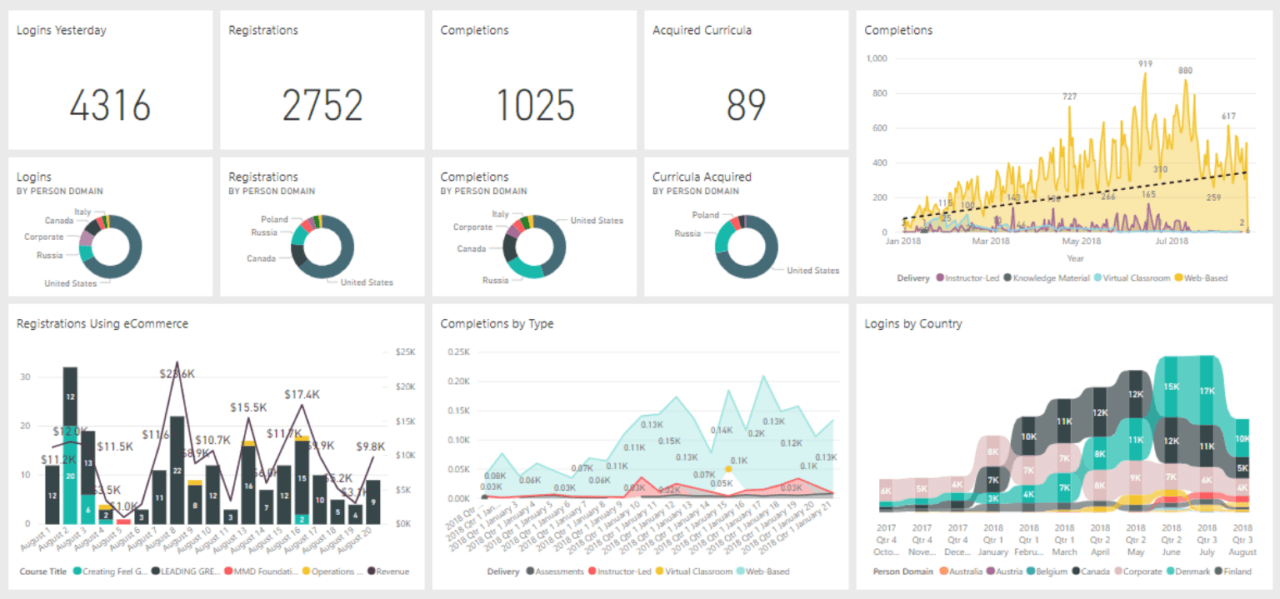
Visualize Learning Data with rapidInform
Bring your learning data to life with stunning dashboards and the ability to slice millions of records instantly.
Some of Our Offerings

Relevant Dashboards
Transform and simplify the ways you visualize, analyze, and act upon your learning data.

Training and Support
Services in the process and best practices for automating the data transfer from your LMS to Power BI.

Advanced Concepts
Access near unlimited ways of expressing data and transform it into actionable reports that help drive data-based decisions.
Six Practical Insights to Drive Systems Adoption
Systems adoption requires people readiness. Here are some key considerations to inform your next implementation.
TiER1 Performance True adoption of new technology platforms can be elusive. Too often, organizations focus disproportionately on getting the technology and process pillars right, meanwhile shortchanging the third pillar of any successful system implementation—people readiness. It won’t really matter how efficient your systems or processes are, if your people aren’t ready and able to work in the new ways required. Maybe that’s why “75% of transformation efforts don’t ultimately deliver the hoped-for results,” as cited recently by the Harvard Business Review.
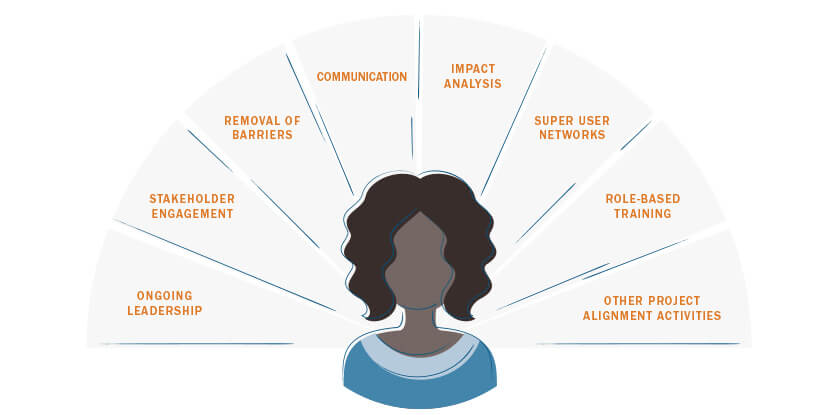
Preparing people for any large-scale organizational change, especially the integration of a new system into their daily routine, takes a convergence of ongoing leadership and stakeholder engagement, intentional communication, thorough impact analysis, prepared Super User networks, role-based training, quantitative and qualitative evaluation, and other alignment activities—all through a human-centered lens.
It sounds like a lot, and it can be. To help you navigate this complex convergence to achieve true people readiness, here are some key considerations and watch-outs to inform your next implementation.
Key considerations for people readiness
Leadership engagement
Involve senior leaders and management at all levels throughout the implementation process. Generally, end users believe, “If my leader doesn’t care, why should I?” That’s why it’s critical to bring in influencers and decision-makers early in the timeline, spending focused time framing and discussing the business case clearly to secure buy-in. Being clear about the resources you need to be successful, and articulating the impacts of not getting those resources (longer implementation time, lower quality, more issues, more help desk calls, longer hypercare, greater time-to-competence after Go Live, productivity loss after Go Live, etc.) is also key. Without the support and engagement of senior leaders and management, employees will experience misaligned priorities and won’t give the change the focus it needs.
Understand your influencers through a stakeholder analysis. Identifying who needs to be aligned across business functions and developing strategies and a cadence for gathering (and addressing) their input over time will help position your initiative for success.
Finally, don’t underestimate the importance of the frontline leader as a change enabler. Frontline leaders have both the budgeting authority to provide necessary resources and tools, and the decision-making authority to remove barriers to change where needed. It is always a good idea to position frontline managers as “change leaders” by engaging them regularly through their established channels, addressing concerns head on, and coaching them on how to actively guide their people toward new ways of working.
Change communications
Create a strategy and plan for transparent and ongoing communication from project launch through post-Go Live. Change communication is about taking people on the (sometimes bumpy) journey to adopt change over time. The key is to be transparent. You don’t have to have all the answers yet, but if you don’t intentionally shape the narrative, the proverbial “watercooler” will.
Put time into developing a compelling narrative for the change. You can avoid miscommunications by rooting the change story in WHY the change is needed. Once that’s understood, leverage clear, concise key messaging that’s light on conventional “business speak” to address the what, when, how, and who. By using empathy, we can put ourselves in the shoes of our audience groups and tailor supporting messages that will resonate with their perspective and help rally minds and hearts behind the desired future state. Consider not just end users but executives, managers, customers, vendors, application developers, project managers, and the larger project team (as the change team also often drives project team communication). The content should become increasingly more targeted and tactical as the project progresses and role-based change impacts are identified.
Leverage a variety of channels to effectively reach every audience. By tailoring your communications approach to how each audience most effectively receives information today, you’ll be able to create compelling stories and visuals that support clarity and info retention while cutting through the clutter. It’s so important to arm managers with the tools to easily reinforce your message—concise slides, talking points, graphics, one-pagers. With some qualitative and quantitative follow-up activities, it’s wise to confirm that cascaded communications are reaching those at all levels of the organization. Giving leaders and managers a “preview” of content before it is sent to their teams keeps them in the know and better prepared to address questions that arise.
Impact analysis
Document and articulate change impacts, then put that information to work. Identifying the “today” versus “tomorrow” view of processes, behaviors, roles, terminology, workload shifts, etc., is critical to set the scene for successful training and overall adoption. People need time to work through what’s coming. In advance of training, socialize critical information such as how things will look or feel different, so that people have space to ask questions and work through the natural emotions associated with change. They will then be able to focus on learning the “how” of the system and related processes during training and other learning events.
Help individuals understand how things are changing at different levels. When documenting impacts, include both the foundational, broad-scale, cross-functional changes that the new system will necessitate (data integration, standardized data conventions, data accuracy, etc.), as well as the more detailed change impacts by function and role, as appropriate. Consider how interactions between various company functions will change (not just how the system will be different), along with implications for customers and suppliers. Armed with a set of change impacts, you can then communicate these changes in digestible ways with progressive detail to ensure understanding around what’s changing, what tradeoffs will be required to be successful, what is needed from specific end users, and how to be successful using the new system and processes.
Reiterate key changes several times through different channels. This could look like meeting presentations, one-on-one role discussions, online reference material, digital posters, along with training events—whatever works for your environment and end users. Remember that often it’s less about “what’s in it for me,” and it’s more about “what’s in it for us” as an organization. Effective change impact communications help employees connect the dots to see that, when the organization does well, everyone benefits.
Super users
Designate a cross-functional group of strong performers to engage early and often with the system. Getting these knowledgeable users involved is CRITICAL to success, as they become valuable eyes and ears “on the ground.” As Super Users they may convey project updates; support solution design, configuration, and testing; inform and help deliver change impacts; answer system questions before and after Go Live; conduct instructor-led training; and gather and escalate feedback to the project team throughout the process. Consider how Super Users will be onboarded, supported, and enabled along the way, and create a steady cadence for touchpoints that combine project updates and two-way dialogue.
Make sure Super Users are appropriately seeded across the organization. When sizing the project team and Super User network, consider the number of end users, the level of change, and resource-intensive project phases (e.g. when testing overlaps with training).
Be very clear about the roles and responsibilities up front. One crucial step is to secure buy-in from Super User managers and business unit leaders regarding taking on this role, with an estimated percentage of the time it will take to do it well. Often it will be lighter on the front end, and the time investment increases with testing participation and before and after Go Live. Once your Super Users are confirmed, be sure to reiterate that time invested up front makes Go Live smoother and decreases time-to-competency after launch. And, for multi-year implementations with staggered Go Lives, don’t wait—bring the later-phase Super Users into the process early to build up-front experience and learnings. It may be tempting to keep them focused on their day-to-day until later, but this time investment can significantly increase the success of later launches.
Training & support
Align training to organizational needs for people readiness. After considering the type of learning needed – based on organizational learning preferences along with the technical and physical infrastructure – determine the right modality (eLearning, virtual, instructor-led, etc.) and curriculum. There will likely be a mix of foundational courses that everyone needs, as well as function- or role-specific courses that address specific processes. Your materials should provide big-picture context for processes up front—especially for ERP systems where upstream and downstream impacts are so significant. Remember to think through the support tools (job aids, quick reference guides, etc.) needed for end user practice and ensure that learners know which Super Users are available to help afterwards. If possible, leverage Super Users to deliver or directly support training events. Facilitating Train-the-Trainer sessions will position them for success.
Document how many processes or transactions need to be taught, and to which audiences. This will give you a rough estimate for the total amount of learning time, but this estimate almost always gets adjusted over time as new transactions, processes, and system characteristics are defined. If doing role-based training, inquire into the number of system security roles, with the understanding that while training roles need to closely align, there are generally fewer training roles than system roles.
Determine who will be responsible for training logistics. Even in the best of times, scheduling training for large-scale implementations can be a daunting task. To address coordination complexities, it’s important to identify who will be responsible for creating and managing the training schedule and invites, and what software or tool they will be using. For in-person training, know who will coordinate the details of the classroom (physical space, hardware/software and IT needs, room setup, managing print materials, etc.). Confirm availability of test data for hands-on practice during and after the sessions as well as how you’ll assess learners based on your objectives. This can range from instructor observation of transactions and thought processes to formal computer-based tests.
Measurement & evaluation
Align change management efforts to the business outcomes and success metrics defined for the overall initiative. In addition to tracking project-wide metrics over time, it takes a combination of qualitative and quantitative feedback mechanisms to gauge how adoption is going throughout a project and inform go-forward approaches or change management interventions to course correct and mitigate gaps.
When creating an evaluation strategy, make sure you can answer the following questions:
- What are we measuring?
- Who will measure it and how?
- When is the best time to measure it?
- What will we do with the results?
Deliver an end user change readiness survey after broadly communicating the “why.” This effort can help you gauge basic understanding of the business case while providing an early benchmark to compare progress against future surveys and project milestones (e.g. after change impact communications and training). Example readiness survey prompts include:
- “I understand why X initiative is important…”
- “I understand the high-level changes that X initiative will bring to my work…”
- “I know where to get help or ask questions about X…”
Consider separate Super User surveys to “check the pulse” of what this key group needs to be successful over time. Another option is to use demographics to build in specific questions for Super Users as part of broader end user survey completion. Qualitative insights from Super User meetings, executive committee meetings, and Stakeholder interviews should also be leveraged to continually improve change management efficacy. And, since there’s nothing worse than feeling like your feedback went into a black box, share out the key trends from the survey, including the high-level actions you’ll be taking to address what you heard.
Other key considerations
Manage between the lines of the project plan. Good change management involves deep involvement in the project, along with nuanced influencing at all levels. Project leaders need strong networks within the organization to marshal support, rally resources, and mitigate risks effectively.
Make readiness the criteria for Go Live. To avoid the mistake of managing only to budget and timeline, make data quality, systems readiness, and people readiness your drivers of a go/no-go decision. There’s always risk involved when going live, but the project team, project leaders, executives, and other stakeholders should all give the green light in a “go/no-go” meeting—so everyone feels ownership of the decision—before commencing cutover tasks.
Sustain the change by capturing success stories and reporting frequently on metrics post-launch. Individuals appreciate transparency about what’s working well and where you need to make adjustments, including where additional human support interventions may be needed.
Support and reward your project team. Take time to build a strong foundation for mutual trust and teamwork. Whether you’re an end user or project team member, implementations are not for the faint of heart. In all phases of the process, plan celebrations and rewards for the project team, Super Users, and end users to celebrate progress and key milestones on what is often a very long and arduous journey.
Bottom line: people readiness matters
The time, effort, and resources required to apply these people-focused principles will enhance your ability to deliver on the projected business outcomes of your implementation, while reducing the extent and duration of the inevitable productivity dip that should be expected and planned for after Go Live. That’s the power of driving people readiness through systems adoption.
Like these insights and want to read more? Check out the following insights on:
- Driving Adoption of Agile Sprints
- Driving Adoption of CRM Systems
- Driving Adoption of HCM Systems
- Driving Adoption of Microsoft 365
- People Readiness and ERP Implementations
If you’d like to connect with our team to learn more about preparing people for systems adoption, give us a call at 859-415-1000 or reach out through the form below.