Enterprise Platforms

Driving Microsoft 365 Adoption
Four key insights for achieving organization-wide Microsoft 365 adoption or other end-user productivity tools.
 TiER1 Performance
 The goal for any end-user productivity tool is to maximize every aspect of work to its full potential. Many organizations have shifted to Microsoft 365 (MS 365) or Google Suite, yet driving successful adoption of these platforms—where teams are saving time, energy, and “churn,” so that end users can focus and execute effectively and efficiently—can be quite different from other enterprise-wide platforms.
Achieving a deep, organization-wide adoption of end-user productivity tools presents unique challenges. Platforms like MS 365 offer an array of opportunities to deliver experiences that will create benefits for individuals, teams, business units, and the organization. At the same time, the ability to custom configure and the sheer volume of configurations available within the platform can be daunting. Combine that with the traditionally hands-off approach to guiding users through systems, and often organizations wind up struggling with where to start, how to start, and how to support users as they leverage the platform more extensively.
At TiER1, we leverage UX design best practices and a deep knowledge of MS 365 to help performers use the right features with the right configurations so that they can have the right experience: an experience that feels useful and easy to them, and adds value to the organization.
Where to start with Microsoft 365 adoption?
One gold mine that we see regularly go untapped is the suite of digital collaboration, documentation, and presentation tools found in MS 365 like Teams, OneNote and Stream. Most people pay for the subscription, but many don’t leverage it, or if they do, they do so begrudgingly.
When we think of Microsoft, we often think of the individual Office applications that we have used for years to write reports, crunch numbers, or create presentations. With MS 365, the focus shifts away from the individual applications and move us toward a singular “front door” to the variety of applications made available through the platform. This shift is experienced by users through the Teams application. Users don’t have to think about 1,000 different places and documents; instead they can access it all through the “front door” of Teams.
Microsoft Teams integrates the wealth of applications in the MS 365 suite, as well as integrating with countless third-party applications, all presented to users as a unified, single-screen experience. It’s a powerhouse for virtual collaboration and workflow. From Teams, you can schedule meetings, record, take notes, create and share documents, converse with your teammates, and build comprehensive Wikis for your projects. (And that’s just the basics.)
This tool has been pinned to many a taskbar recently, but many are just starting to get comfortable with it, and more aren’t sure how to maximize its potential. A critical ingredient to unlocking the full benefits of these features lies in getting users to embrace the digital transformation opportunities of the platform that lead to new ways of working.
Driving Microsoft 365 adoption across the organization
When driving towards a deeper and wider adoption of a platform like MS 365, consider applying the following four concepts in addition to leveraging the framework of a solid systems adoption plan.
- Capturing tasks and goals
- Establishing governance
- Providing guiding examples
- Adapting to end user feedback
1. Capturing tasks and goals
It’s critical to understand how end user tasks that will be accomplished via the digital environment will add business value or help the organization reach its goals. Identify common team types throughout your organization and engage with them to understand how these teams operate, communicate, and collaborate today.
Our tips for capturing tasks that drive Microsoft 365 adoption:
- Identify how people currently use the tools, as well as how they want to use them or how the organization would like the tools to be used.
- Benchmark whether those activities are effectively supporting the business unit goals.
2. Establishing governance
MS 365 is a collection of platforms, applications, and tools, with wide applicability and integration capability with many other platforms and tools. Using MS 365 is rarely mandatory, except for document applications (Word, PPT, Excel). Even then, accepted norms, practices, and workflows are not often optimized, even within an established team.
Our tips for establishing governance to drive Microsoft 365 adoption:
Create guidance and provide standards for:
- Setting up a Team and Teams channels (Owners and Members), and other information architecture standards such as folder structures, tags, labeling, and naming conventions.
- Storing files that are adaptable to individual teams, including file naming conventions.
Posting comments to maximize engagement and search.
Document core structures and processes around:
- Meeting setup, including whether using Teams and Outlook interchangeably, as well as linking meetings to Teams channels.
- Note-taking, such as using OneNote or the meeting notes feature in Teams.
- How to record meetings and how to find recordings for those who cannot attend a meeting.
- File linking and file sharing.
3. Providing guiding examples
Unlocking the full potential of MS 365 requires a shift in mindsets and behaviors. One of the biggest mindset hurdles is “my document” or “my stuff” in a shared, collaborative digital environment. There can also be learned mistrust among end users due to previous negative experiences with technology. To lead end users to want to adopt MS 365, design case-based Teams sites informed by your governance to then be socialized and piloted across your organization.
Our tips for providing guiding examples that drive Microsoft 365 adoption:
- Build out a business case based on common team types across your organization, such as sales, product, finance, or tech.
- Leverage your governance to create sample Teams sites that can be utilized by these teams to get them started.
- Introduce simple workflow frameworks, examples, and templates that can be easily modified.
Set up appropriate application integration samples by business case.
4. Adapting to end user feedback
As your organization engages with MS 365, especially through Teams, driving productive adoption means you need to be agile and responsive to end user feedback. Creating an active feedback loop will provide you with insights on the features and applications your teams find valuable, the digital workflows they need as they adopt new ways of working, and the enhancement to governance that will unleash their potential. Adapting to end user feedback will also build trust that their ideas are heard, valued, and acted upon.
Our tips for adapting to feedback to drive Microsoft 365 adoption:
- Set up a feedback loop for your core teams using metrics built into the Teams interface to monitor activity in their channels and evaluate needs for design improvement.
- Adapt your examples based on feedback, as well as adjusting workflows as needed.
- Adjust workflows and add more complex workflows as MS 365 continues to evolve and provide new tools, AI, and methods to support digital ways of working.
About the Authors:
Corey Leverette is a Principal Consultant at TiER1 with extensive experience in culture transformation, employee engagement, and behavioral change—all aligned to create value. When he’s not connecting people, performance, and value; he loves spending time with his wife, their rescue dogs, and many nieces and nephews.
Stephanie Roberto is a Senior Solutions Technology Consultant at TiER1 Performance. She is passionate about combining technology and visual design to deliver innovative and engaging experiences to end-users. She loves being creative and guiding clients through the creation of technical solutions. Outside of work, Stephanie enjoys running, pure barre, and pilates.
Like these insights and want to read more? Check out the following insights on:
- Why People Readiness Matters for Systems Adoption
- Driving Adoption of Agile Sprints
- Driving Adoption of CRM Systems
- Driving Adoption of HCM Systems
- People Readiness and ERP Implementations
If you’d like to connect with our team to learn more about building organization-wide adoption of Microsoft 365, give us a call at 859-415-1000 or reach out through the form below.
Driving Systems Adoption as Developer
Unpacking the critical role that Application and Process Developers play in every system implementation.
 Brandee Fantini – Principal and Strategy Activator
 Driving Systems Adoption as the Developer
As a developer, your focus is the system, processes, and making it all work as expected for end users and business leaders. You might not be directly involved with people readiness strategies and activities, but you play a significant role in both. In developing the process or application, you put yourself in the shoes of the user. You work to gain a solid understanding of the process until you fully comprehend the end-to-end processes executed within the system and outside of the system.
“The change team understands some of the critical tips and tips for better user adoption. Efficiency often lies in a few small details that allow the business to achieve the desired results,” said Doug Whiting, Global SAP Practice at DXC.
Value of change management for developers
Change management is valuable to you because it drives adoption of the process improvement you poured blood, sweat, and tears into creating.
The change team helps bring the project team closer to end users. While business process/workstream leads are usually chosen for their deep expertise in current systems and processes, a broader perspective from end users is always needed. The change team expands those connections and is a partner in listening intently to end users so that requirements are clear and obstacles are identified and resolved, allowing people to focus on adopting the processes you’ve built.
Your role in driving change
Unless people are using the system as intended and without questions, it’s important to dig deeper into the “why.” Sometimes it’s process issues, sometimes it’s lack of communication or training, and sometimes the system is too cumbersome or challenging, so workarounds become the norm. Limitation in the software can also lead to challenges.
As end users start to engage in system demos, training, and practice, you play an important role in easing anxiety, answering questions, and troubleshooting challenges when the unexpected happens. Those unexpected results provide great learning opportunities. When you can quickly explain why that result occurred and how to adjust to get a different result, you’re driving adoption. The sense of confidence that end users achieve from learning the system is contagious, and it helps others gain confidence as well.
Work closely with end users to truly understand their needs and ways of working and listen intently to what’s important to them. That way, you will be best positioned to offer options and solutions that work. Ask questions, challenge the existing process, and offer alternative (more efficient) ways of thinking that are possible with a new system. Take the opportunity to provide process improvements, which go hand in hand with new system implementations.
At the end of the day, remember that tensions between system and people readiness are inevitable and healthy. It helps to be balanced in prioritizing. Great people with a positive mindset can often make a bad system work, but rarely will people make a system work when they don’t want it to work.
In addition to your role as End User, there are several key roles in the project team AND the change management team for driving change and systems adoption. To learn more, check out our insights on:
- The Value of Driving Systems Adoption Across Roles
- Driving Systems Adoption as the Business Stakeholder
- Driving Systems Adoption as the End User
- Driving Systems Adoption as the Project Manager
- Driving Systems Adoption as the Project Lead
- Driving Systems Adoption as the Sponsor
If you’d like to connect with our team to learn more about driving systems adoption, give us a call at 859-415-1000 or reach out through the form below.
Driving Systems Adoption as Business Stakeholder
Unpacking the critical role that business stakeholders play in every system implementation.
Brandee Fantini – Principal and Strategy Activator Driving Systems Adoption as the Business Stakeholder
Every member of the project team has a role to play in driving change, readying people, and creating the environment for successful implementation. Depending on what type of system is being implemented, you could be the primary sponsor or one of many who will be adopting the new system and related processes. You likely lead people who will be Super Users and end users. You will be impacted by the change in ways that are beneficial but likely require tradeoffs (for example: more clicks for data collection, but greater visibility and predictive analytics).
You significantly influence who supports the project team, who becomes a Super User, how training is conducted (and when), and how much time people have to prepare prior to Go Live. You’re also juggling competing priorities to meet the objectives of your department/site/function while simultaneously supporting the project.
Value of change management to Business Stakeholders
Change management is critical for minimizing risk to your post-Go-Live productivity and ability to meet internal and external demands. The change team is your advocate, raising up the voice of the user to developers, leaders, and the broader project team. They help communicate priorities and resolve many challenges.
There will be times that the change team will ask for access or time from some of your most critical team members. The concept of “pay now or pay later” is super relevant to you. It’s hard to justify shifting people’s time and focus to something that could happen years from now (Go Live). In our experience, though, most business sponsors wish they had dedicated more upfront resources to people readiness once they get past Go Live, when lack of preparedness is most obvious and incredibly challenging to address quickly.
The change team will help you identify those who are the strongest in system usage and related processes. They can also support identifying and mitigating current process, environmental, and organizational constraints that could negatively impact Go Live. You can depend on your change team to identify risks and pursue those with the project team to ensure resolution. The change team champions the end user in all things.
The change team can also guide effective change communications for your role, as well as provide tools and messaging to make it easier. They will partner with you to find the most impactful ways to engage your team (end users). Work closely with them to explore and document specific changes and how end users will need to adapt to those changes, both with using the system and the processes that occur outside the system.
Your role in driving change
As a Business Stakeholder, your role in driving change is multifaceted. Your mindset about the system implementation will make a significant difference. If you embrace the change, recognize the reason for it, and are willing to commit resources to people readiness and the project team, you likely need fewer change resources. If you are opposed to the change, feel it is being forced on you, or have too many priorities to focus on the systems project, then likely more change resources will be needed to help you succeed at and after Go Live.
Every minute spent on people readiness prior to Go Live is a minute less your team will have to spend learning the system or finding/fixing issues after Go Live. If you invest heavily up front, there’s a high likelihood that your Go Live will be smooth and you can get back to baseline levels of productivity relatively quickly after that first dip at Go Live.
Share with the change team your expectations, concerns, and challenges. Allow them to get to know your organization and your people deeply so they can best help you succeed. While the change team is your resource in driving and facilitating readiness, only you and your team can do the work required to BE READY on Day 1.
In addition to your role as Sponsor, there are several key roles in the project team AND the change management team for driving change and systems adoption. To learn more, check out our insights on:
- The Value of Driving Systems Adoption Across Roles
- Driving Systems Adoption as the End User
- Driving Systems Adoption as the Process/Application Developer
- Driving Systems Adoption as the Project Manager
- Driving Systems Adoption as the Project Lead
- Driving Systems Adoption as the Sponsor
If you’d like to connect with our team to learn more about driving systems adoption, give us a call at 859-415-1000 or reach out through the form below.
Driving Systems Adoption as End User
Unpacking the critical role that End Users play in every system implementation.
Brandee Fantini – Principal and Strategy Activator In a system implementation, your role as end user is arguably the most important. If and how you choose to use the system and adopt new business processes will make or break a successful Go Live. A great deal of time and resources are dedicated to ensuring you understand why the change is happening, what’s expected of you at Go Live, and how to use the system on Day 1 (and beyond).
Value of change management for End Users
Change management is your champion—they are your advocate in all things, and they often act as the voice of the end user to the project team, sponsors, and business stakeholders. The number one task of the change team is to ensure you have everything you need to be successful, that barriers you encounter on the journey to adoption are identified and removed, and that the system and associated processes don’t put an undue burden on any individual or role.
That doesn’t mean change will be easy or that some roles/individuals won’t have more system clicks or different responsibilities than before. But it does mean having a team dedicated to your success every step of the way. Tensions between system and people readiness are inevitable and healthy. It helps to have balanced priorities. Great people with a positive mindset can often make a bad system work, but rarely will people make a system work when they don’t want it to work.
Your role in driving change
Your role in driving change is to keep your mind open and actively engage in learning about the new system, processes, and associated changes. Read communication, attend meetings, ask for practice sessions, go to training, ask questions, and speak up if needed. When learning about the system, think not only of your role, but how your actions and system transactions affect others up and downstream. Have a solid grasp on what parts of your work can and cannot be done in the system, and what parts must be completed outside the system.
Pay special attention to changes that require communicating to other functions, departments, or roles—you might need to build new relationships with people you’ve never had to worked with before, which is actually one of the more challenging aspects of a system implementation.
Lean in. Get your hands on the system every chance you get prior to Go Live. You can impact how the system is designed (at least to some extent), what processes will exist, and how you will be prepared and trained. The more engaged you are and the earlier you get engaged, the more successful you will be at Go Live and beyond.
In addition to your role as End User, there are several key roles in the project team AND the change management team for driving change and systems adoption. To learn more, check out our insights on:
- The Value of Driving Systems Adoption Across Roles
- Driving Systems Adoption as the Business Stakeholder
- Driving Systems Adoption as the Process/Application Developer
- Driving Systems Adoption as the Project Manager
- Driving Systems Adoption as the Project Lead
- Driving Systems Adoption as the Sponsor
If you’d like to connect with our team to learn more about driving systems adoption, give us a call at 859-415-1000 or reach out through the form below.
12 Tips for Driving Adoption of CRM Systems
Your CRM system is only as good as everyone’s ability and willingness to use it.
Brandee Fantini – Principal and Strategy Activator Digital transformation is disrupting markets at an alarming rate, but it’s not the technology that drives competitive advantage—it’s the people driving the technology. Achieving total systems adoption can be intimidating, especially in the sales and marketing arena. There are unique challenges to driving adoption of Customer Relationship Management (CRM) systems. Too often, organizations lack consistent processes, culture, and practices, which makes it difficult to reinforce trust and the appropriate usage of a CRM.
Successful CRM adoption is critical to not just keep up with competitors, but to leverage as a competitive advantage. And no matter how good your CRM system is, it’s only as good as everyone’s ability and willingness to use it.
Common blockers for CRM adoption
We have seen many companies struggle with adoption of their existing CRM system, and we often get the call to help drive adoption. When we start digging into the situation, we often learn that people know how and when to use the system. However, in nearly every “rescue” operation we lead, the critical issue is that people don’t understand why they need to use the CRM in a consistent and disciplined way.
In interviews with end users, we’ve heard phrases like:
“Using the system takes too much time.” “I’ve been successful at selling and servicing customers up until now without a CRM—why should I change my process?” “Using it takes away from my time with customers.” “I don’t need ‘Big Brother’ checking up on my activities.” “It’s too cumbersome.”
We have found that helping sales and customer service teams understand the benefits of adopting a robust CRM as it relates to their personal development is half the battle. The other half of the battle lies within the system design and user experience. The system must be perceived as a useful and valuable tool that enhances workflow. In essence, it must help sales and customer service users do their job better and more effectively deliver value to the customer. If the system’s design fails in this endeavor and is only regarded as a burdensome distraction, or it lacks a user-centered configuration or design approach, adoption will not happen.

12 tips for driving CRM adoption
Here are a few ways that we have helped companies drive successful CRM adoption to achieve ROI and deliver real business results.
1. Create a compelling narrative about “the why” and equip leaders to tell that story to their teams easily and authentically. Reinforce “the why” again and again.
2. Articulate the value of usage to the sales and customer service teams and spend a lot of time talking about “what’s in it for us” as an organization. Sometimes systems do take individuals more time to use them than not using them, but that’s not the only measure of a system’s success. The communications plan should clearly connect the sales team to the quality of the data they are inputting and its impact on data analytics, key insights, and ultimately, business outcomes.
3. Understand stakeholders: who are they, what can they gain from system usage and data analytics, and what tradeoffs are required for adoption to be successful. Have a solid plan to ensure all stakeholders are aligned on the desired outcomes and the path to get there.
4. Understand the intended users of the system and customize your change plan to drive adoption for people who are motivated differently. Adoption occurs at varying intervals and speeds within most organizations, which is why the messaging must be consistent, delivered in different formats (often several times), and created to address multiple value points or motivating factors.
5. Spend time and energy working with leaders and managers to define their usage best practices. If the leadership team does not use reports to drive decision-making, then there is no incentive for others to use the system. Leader attitudes, mindsets, and behaviors have a significant impact on motivation and attitude within the sales and customer service teams.
6. Identify influential salespeople in various regions and business units who will spend a portion of their time becoming expert CRM users and advocates for system usage. Position these experts as the go-to people not just for fingers-on-the-keyboard help, but for coaching other reps on best ways to succeed (including, of course, using the CRM).
7. Create dashboards and success metrics that reflect system usage. Talk about the data, reflect on insights, use the data for coaching and development conversations – make the data central to the role of selling, and visualize that data whenever possible.
8. Identify and remove barriers to adoption. If salespeople have outdated phones and clunky laptops, they don’t have the tools they needed for success in a digital world.
9. Think about rewards and recognition programs. If you reward salespeople for time spent with customers and not for capturing data and reflections about that time spent, you’re creating your own adoption issues.
10. Update job descriptions and performance metrics to include consistent, disciplined usage of your CRM. It’s a critical tool for high performance, so reflect that in your people development and leadership practices.
11. Gather and tell success stories about sellers who drive positive outcomes through CRM usage. Celebrate those wins and explicitly connect the win with usage of the CRM.
12. Revisit the narrative about “the why” often. Continue to connect usage to positive business outcomes, both in operational conversations as well as corporate strategic conversations.
While all the components of an effective change solution are needed, those mentioned above are specific to driving adoption of CRM systems. If you’re implementing a new CRM or want to supercharge your business results by driving greater CRM adoption of your current system, we would love to be your thought partner.
Like these insights and want to read more? Check out the following insights on:
- Why People Readiness Matters for Systems Adoption
- Driving Adoption of Agile Sprints
- Driving Adoption of HCM System
- Driving Adoption of Microsoft 365
- People Readiness and ERP Implementations
If you’d like to connect with our team to learn more about driving CRM adoption, give us a call at 859-415-1000 or drop us a line below.

Make Change Irresistible
Change can be fun AND measurable. Combine behavioral science with social game mechanics to create a fun, measurable, and integrated approach that gamifies adoption while measuring change readiness.
Request a DemoAre your people ready for transformation?
Whether you’re deploying a new learning platform, embedding new ways of working, or increasing usage of AI tools, Adoptify boosts adoption rates, fosters team collaboration, and provides real-time insights into change readiness—transforming organizational change into an engaging, measurable experience. Here’s how:

Fun that Fuels Change
Adoptify isn’t just about managing change; it’s about embracing it with enthusiasm. By turning the process into an engaging experience, we make participation not just a duty but a delight. It’s change management reimagined, where every task becomes a thrilling challenge, and every achievement motivates your team.
Measurable Success
Visibility into the progress of your change initiatives is crucial, and Adoptify delivers it in real-time. The web-based platform allows you to compare adoption rates across departments, identify potential hurdles early, and celebrate your champions. With Adoptify, you’re not just hoping for success; you’re measuring and achieving it.
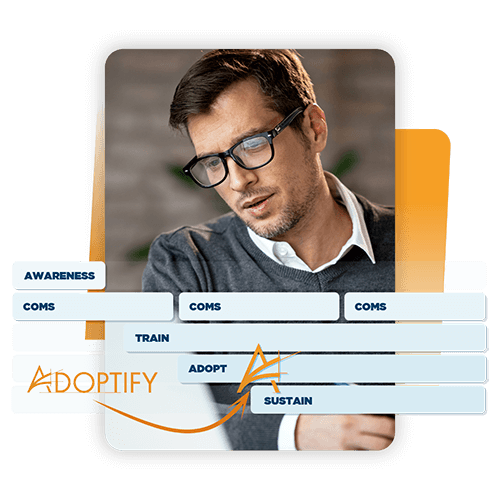
Seamless Experience
Adoptify is the turbo boost your transformation strategy needs. It integrates with your existing setup, enhancing your current technology systems, training programs, and corporate narratives. Adoptify is designed to amplify your efforts, ensuring a cohesive and comprehensive approach to change.
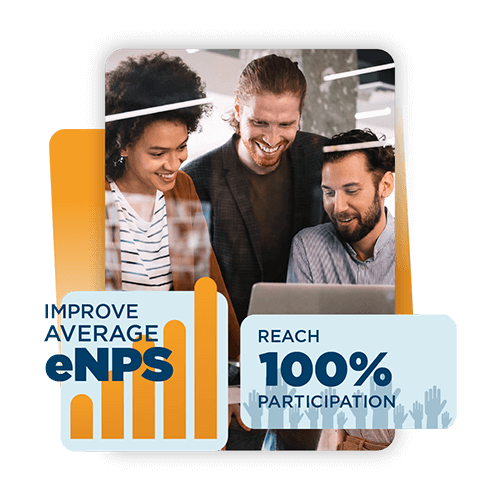
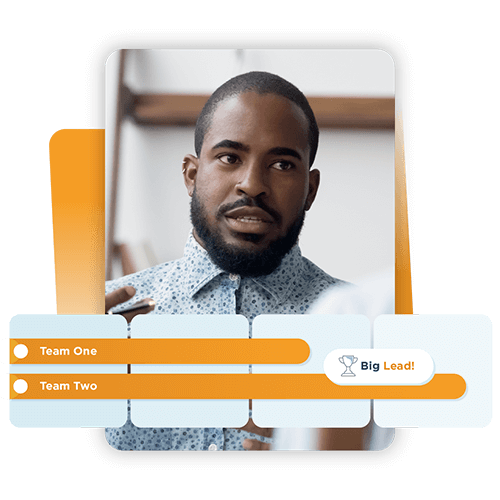
Team-Based Experience
Adoptify transcends traditional change management, embedding a culture of participation, collaboration, and continuous improvement. It’s a unifying force, enhancing team dynamics and engagement, and building a resilient, change-embracing culture. Teams engage in your activities together to promote accountability and share successes across the campaign. Leaderboards incentivize individuals and teams to deeply interact with your change strategy.

Want to learn about the science behind Adoptify?
Read the WhitepaperWhere Adoptify Has Improved Change Adoption


“We achieved our communication objectives, ensuring associate engagement and confidence in our messages about the project moving toward go-live.”
– Fortune 100 Manufacturing General Manager & Adoptify Client
Built for Humans
Adoptify works because it makes participating in change inviting and fun.

Focused
It cuts through the noise. Your change is never the only initiative going on. This experience will catch your employees’ attention and get them excited to participate.

Relevant
It’s tailored to your culture. Is your workforce motivated by giving back? Time off? Choose the rewards that are meaningful to your team.

Motivational
It inspires, recognizes, and tracks change champions. Adoptify gives everyone a chance to pitch in—and be celebrated for their efforts—so you always have a pulse on who is championing change organically.

Competitive
It fuels playful competition. With leaderboards that post real-time team status, your players will be motivated to engage in the activities that score points for their team—and you get real-time adoption metrics.

Sustainable
It ends that drinking-from-the-firehose feeling. With bite-sized challenges, your employees’ time and attention is focused on the most critical tasks each week.

Impactful
It’s team-based, so change is co-created by your employees. Adoptify unites people with a common goal. Instead feeling like the change is happening to them, users build the change together while sharing feedback along the way.
Flexible & Engaging
Adoptify integrates into your change management strategy and can be customized to support your unique goals and context.
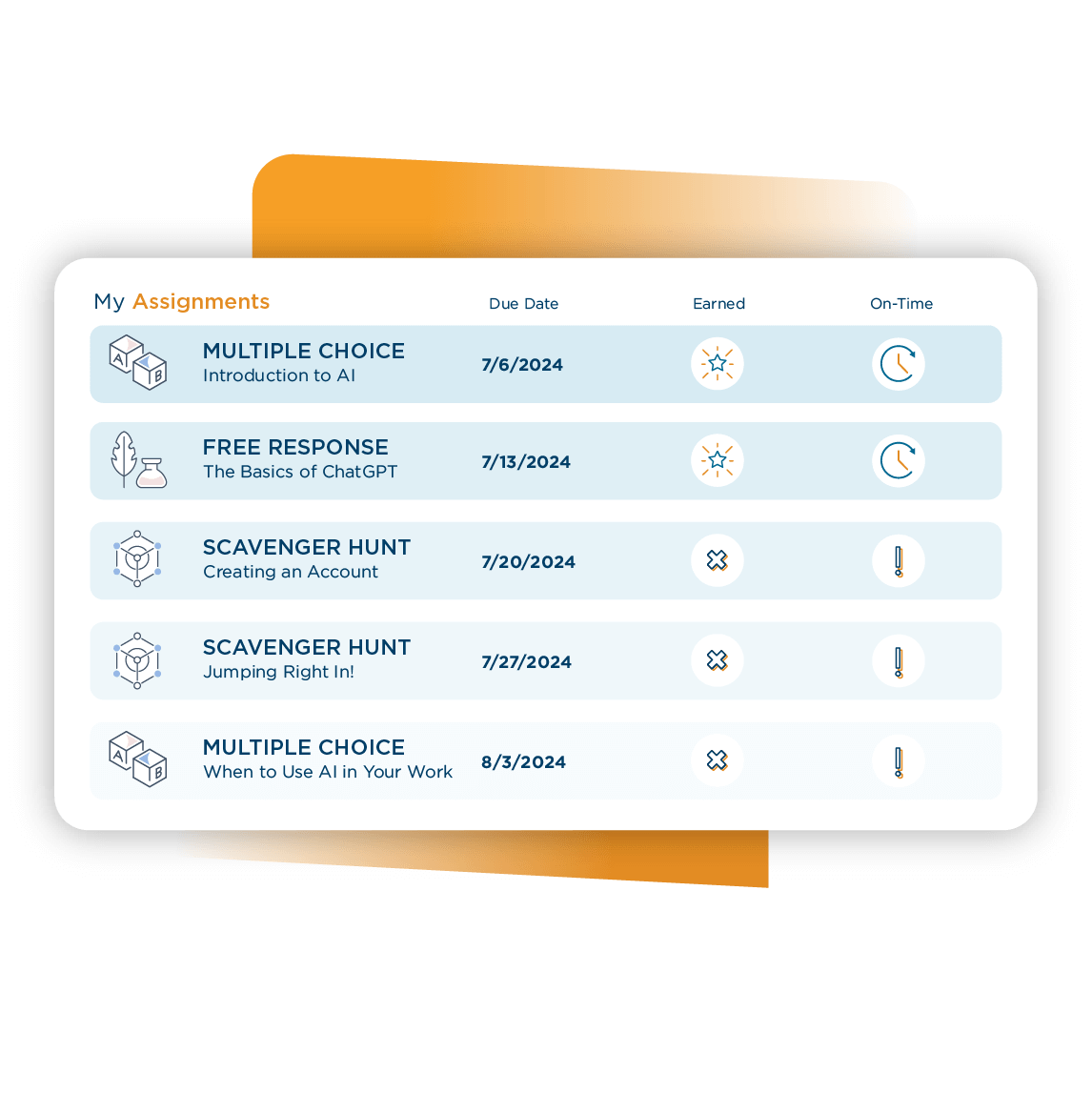
Create Weekly Challenges
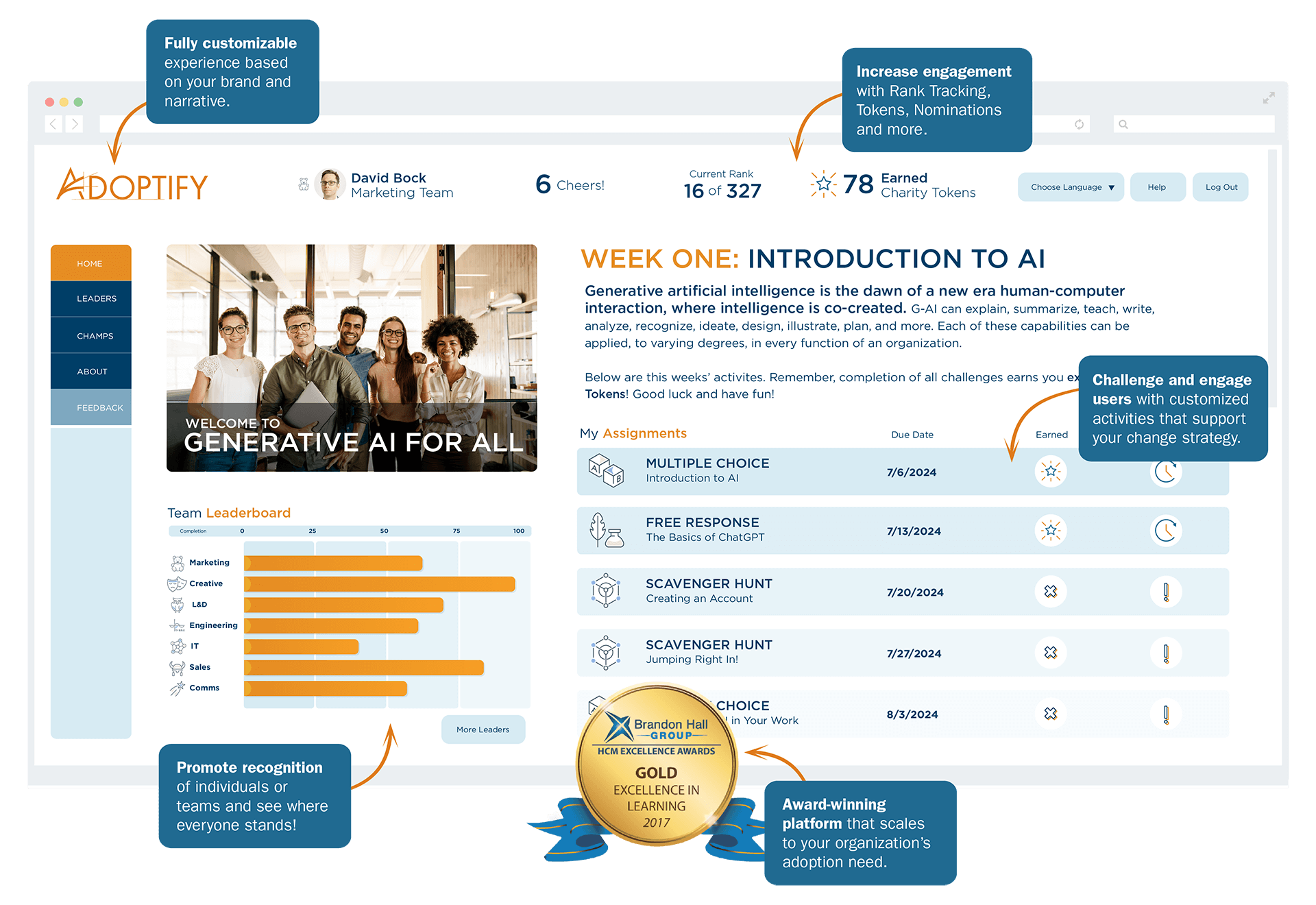
Deliver weekly challenges that drive users to engage with your change strategy’s key objectives. Designed to take a matter of minutes each week, this builds small habits over time.
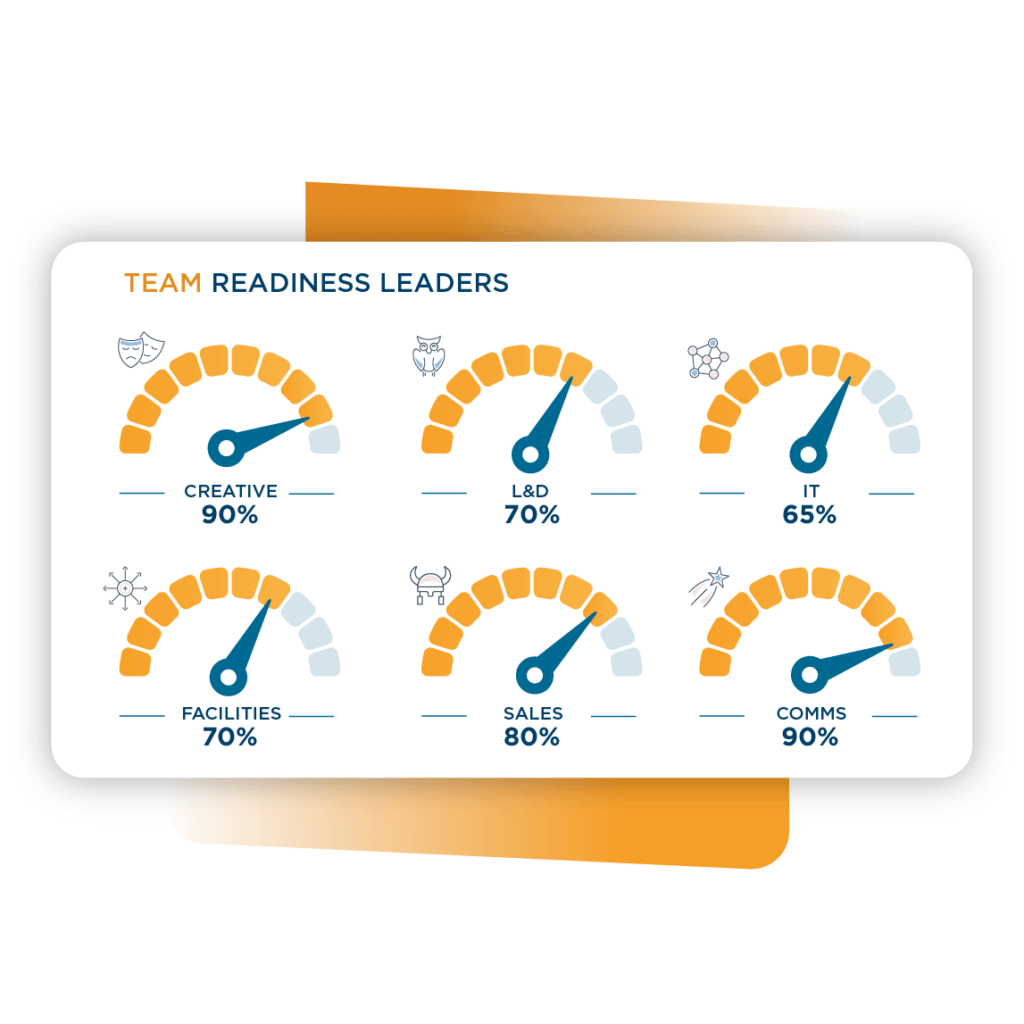
Measure Teams & Motivate Progress
Friendly competition between teams paired with meaningful rewards drives collaboration and team-owned accountability. It also lifts up where there might be barriers to the change within the organization.
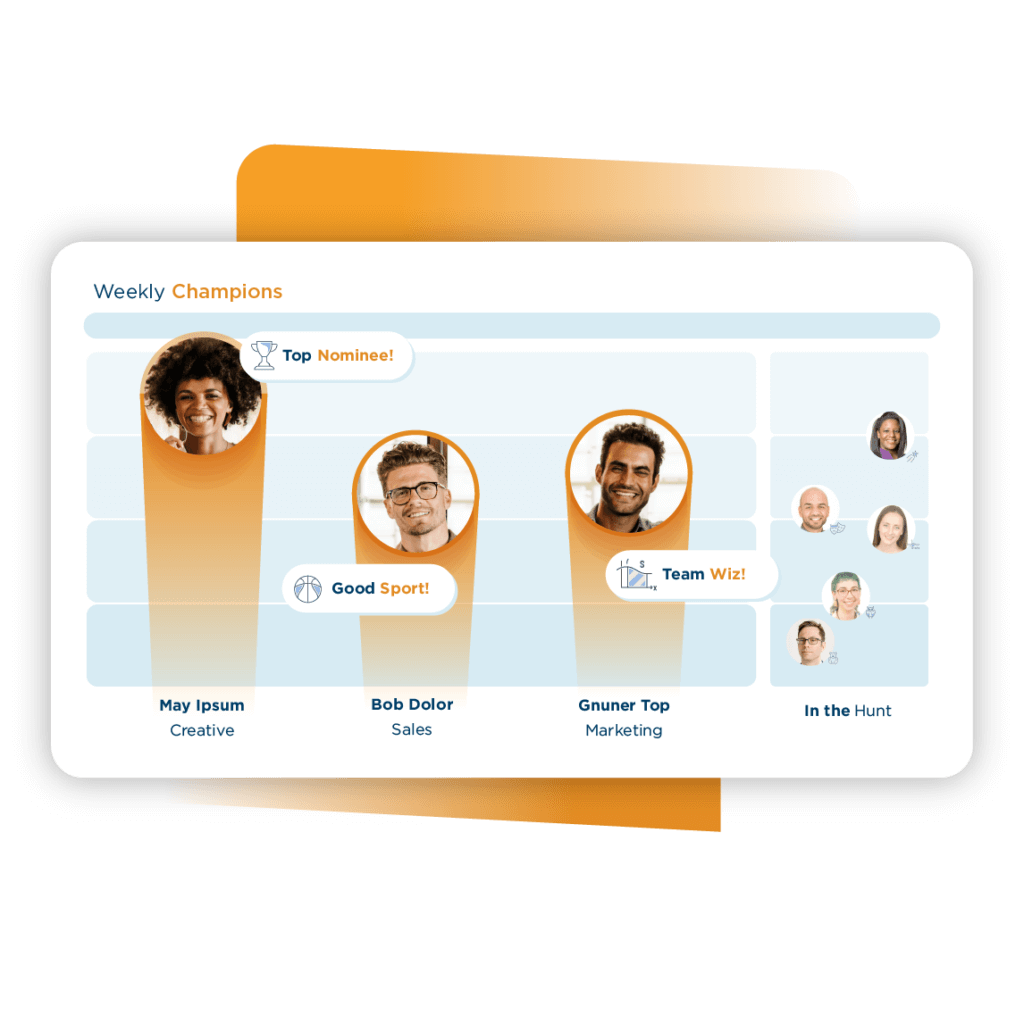
Build Community & Champions
Change champions are critical to every major change. Adoptify lifts up the champions that are most passionate about supporting others through the change. Gain the insights to support them!

Completely Customizable
Your brand. Your message. Your narrative. Adoptify’s flexibility allows your communication and brand strategy to shine through for a seamless experience linking back to your systems and platforms.
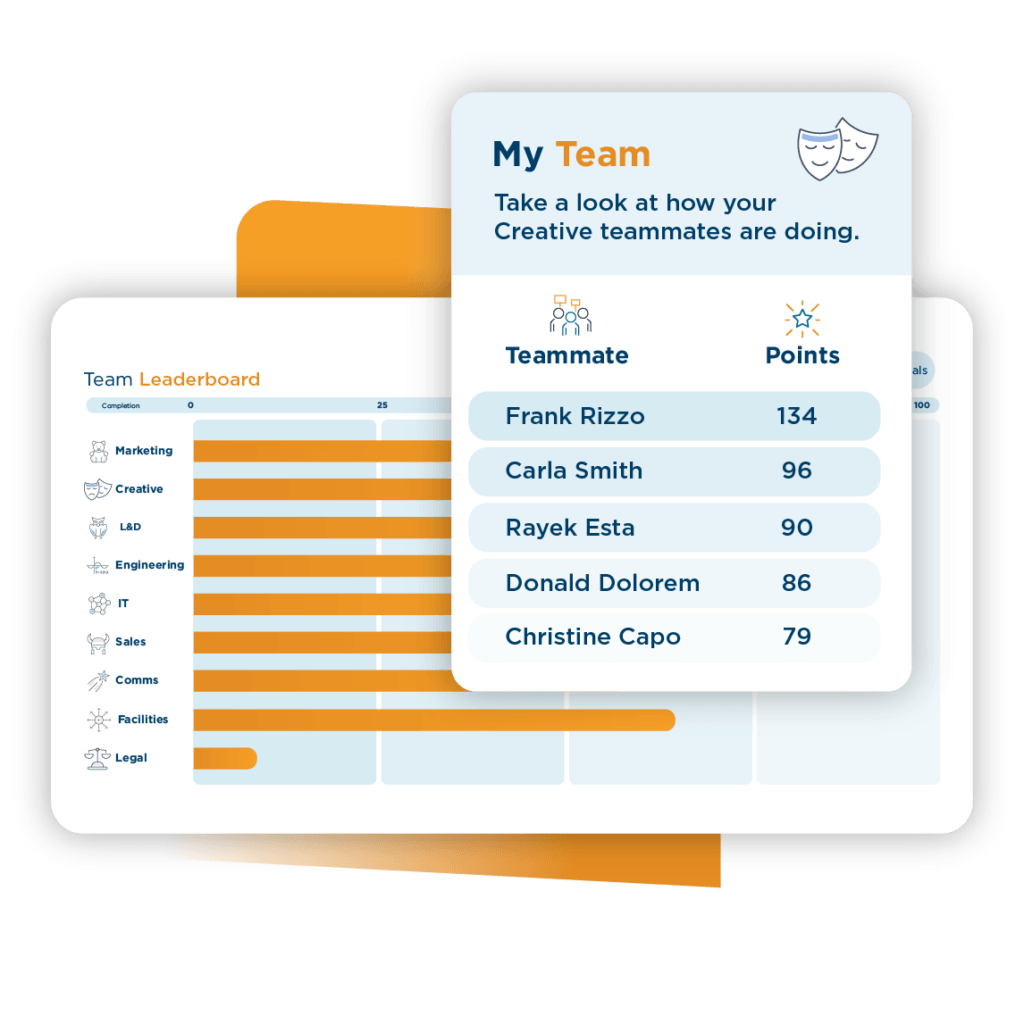
Track Progress with Leaderboards
Not only does Adoptify give change leaders the data they need to understand readiness, but the transparency of the leaderboard data also builds motivation for individuals to embrace change efforts.

Modernization That Scales Across a Global Enterprise
At a global pharmaceutical company, we partnered to transform the organization to a unified digital user experience across regions while building the capabilities needed to sustain future evolution at scale.
Let’s TalkEmpowering Owners of Transformation Throughout the Business
Over more than a decade, this global biopharmaceutical organization embarked on several growth and transformation efforts including technology modernization and post-merger cultural integration to learning-ecosystem design and future-ready ways of working. Each effort was part of a broader push toward a learning-centric, digitally fluent, globally aligned enterprise to enable their patient-centricity.
The Ask
Launch an ambitious effort to modernize IT and deliver a unified user experience across the United States, Japan, and Europe—aligning stakeholders, activating adoption across 30,000+ employees, and creating scalable frameworks and tools that future initiatives could reuse.
The Approach
- Define the strategy. Co-created a clear change narrative and success measures anchored in productivity, protection, and collaboration, positioning the global unified experience as an enterprise story—not just a tech rollout.
- Align the organization. Built stakeholder maps and alignment tools across hubs; launched a 300+ member Change Champion Network to localize messages, surface risks, and keep feedback flowing.
- Engage your people. Designed a global internal campaign—multilingual assets, visuals, and roadshows—and launched a Tech Ambassador program that connected everyday scenarios to new ways of working.
- Implement and enable. Stood up a SharePoint content hub, editable newsletter templates, and asset libraries; equipped local teams with a practical playbook and toolkit for consistent execution and measurement. This was accompanied by global learning and development strategies and tools to develop the capabilities needed to sustain the digital fluency needed to realize the ROI of the transformation.
The Outcome
- Global alignment across multiple enterprise functions around modernization goals.
- The client experienced positive internal momentum with high user adoption and digital change goals being met.
- Increased activation of core productivity tools in year one allowing better realization of investment return. Replicable frameworks increased efficiency and are used as a blueprint for change initiatives.
- Seamless sustainment of SharePoint hub, toolkits, and channels which were designed for long-term ownership by internal teams. In addition, the Change Champion Network was sustained as the global activation model.

Related Case Studies





ERP Go-Live at Scale: Zero Customer Disruption
After a landmark acquisition doubled the size and complexity of operations, this Fortune 500 enterprise needed to streamline processes, data, and people on a common ERP—without disrupting customers. We built the business-readiness engine that made day-one execution possible and created confidence across the workforce.
Let’s TalkEnsuring Business Readiness
A global enterprise acquired a North American business, creating two sides of the 40,000-employee organization with different systems and ways of working. The company chose to streamline processes and integrate real-time data across functions by implementing SAP as a common ERP across the organization. The magnitude of change—spanning diverse regions, roles, and long-held habits—was compounded by a headquarters relocation and ongoing organizational realignment. The challenge: bring everyone together quickly, consistently, and safely.
The Ask
Lead the people side of a multi-year SAP implementation by establishing a scalable change and learning capability that would prepare thousands of employees, minimize risk, and deliver a seamless customer experience at go-live.
The Approach
- Documented 200+ role-specific change impacts with coaching tools for managers (including 15+ Role Discussion Guides).
- Built a segmented communication program (30+ targeted emails, a 12-part poster/table-tent/site-video series) personalized for specific audiences.
- Designed a transformation website with just-in-time resources and learning tools: 100+ FAQs, 200+ glossary terms, and 28 articles.
- Designed and delivered 70 training courses across finance, logistics, manufacturing, purchasing, planning, business intelligence, and order management. Delivered 1,800 hours of training and 20+ roadshows.
- Enabled consistent, branded communications with a reusable suite of templates (email, Word, PowerPoint).
- Activated 200+ power users and 150 stakeholders to accelerate readiness and sustain adoption through Power User and Change Champion networks to localize guidance and facilitate feedback.
The Outcome
Phase-one go-live was achieved without negative customer impact—orders taken, product made and shipped, invoices issued, and payments processed on day one.
On-time financial month-end close after go-live.
Every change-readiness metric was met between kick-off and go-live; employees understood what was changing and how it affected their roles before training.
Training outcomes exceeded expectations: 80%+ satisfied; 100% said the training would make their jobs easier.
Ultimately, the organization succeeded in streamlining technology and business processes to bring the organization together after the acquisition.

Related Case Studies



Enabling Change Leadership
When change became business as usual, this retailer enabled leaders to create a seamless change experience for employees by providing a brand-right change methodology, easy-to-use tools, and scalable training to enable ownership.
Let’s TalkYour Leaders Can Make or Break Change
This retailer was continually transforming to stay competitive in a rapidly changing market. Sound familiar? With the significant organizational transformation they were prioritizing, the pace of change was outpacing their leaders’ ability to manage it effectively and consistently. This was negatively impacting the employee experience and talent retention. This forward-thinking client saw the need to build an internal capability that would equip leaders to guide change more effectively and create a more unified employee experience.
The Ask
A consistent internal change enablement capability, anchored by a clear methodology, scalable training, and access to easy-to-use tools for leaders and change practitioners.
The Approach
- Facilitated collaborative design sessions to align on outcomes, a tailored change model, and the tools needed to support it.
- A co-created brand-specific change methodology based on organizational culture and strategic needs.
- Weekly practitioner training sessions for HR business partners and learning managers.
- A user-friendly capability portal that housed change tools and resources for just-in-time access and application.
The Outcome
The change enablement model was adopted across departments enabling branded and consistent change communication and roll-out experiences.
Leaders reported increased confidence in their skills and ability to plan and lead change.
The capability portal became a centralized resource for both experienced practitioners and first-time change leaders, increasing efficiency in finding what they needed while ultimately improving the employees’ experience.

Related Case Studies


Supply Chain Transformation Through People
At a beverage manufacturer, rapid growth demanded a more scalable, disciplined supply chain—without losing the entrepreneurial drive that fueled early success.
Let’s TalkWhen Growth Outpaces the Operating Model
Operations rooted in a start-up mindset could no longer meet fast-rising demand. To protect future market share, the company needed to modernize structure, roles, skills, processes, technology, and mindsets—and align teams to five future-state behaviors: end-to-end supply chain comprehension, cross-functional collaboration, process discipline, transparency, and data quality and integrity.
The Ask
Design and activate a people-centered transformation that:
- Defines a clear future state, then sequences org, role, and process changes to get there.
- Builds change leadership, engagement, and communications as an integrated engine.
- Establishes reusable patterns (cadence, toolkits, governance) so momentum compounds over time.
The Approach
Define the strategy. We defined the future state and role/structure alignment; defined how people will shift to new ways of working.
Align the organization. Starting with the value-delivery model and leadership structure, we moved into role design and detailed design and implementation—then supported implementation by aligning leaders, training for new roles, and aligning people practices (rewards, performance, career).
Engage your people. We activated a predictable engagement cadence, enabled leaders and teams with coaching and toolkits to empower them throughout the transformation. A dedicated planning function, stakeholder engagement plans, and a champion network kept feedback flowing and decisions clear.
Implement your plan. We built memorable on-brand assets paired with integrated experiences and communications (lunch & learns, demos, cross-functional connection, and a one-stop portal) to maintain awareness, confidence, and sustain measurable adoption and new ways of working.
The Outcome
- Enterprise alignment. Leaders and teams rallied around the same future state and the five behaviors that drive it.
- Operational discipline that travels. Clear roles, accountabilities, and processes improved cross-functional flow and decision rights.
- Sustained capability. A planning function, champion network, and integrated comms model kept momentum—and the transformation—alive beyond go-live.
- Reusable playbook. The cadence, portal, and engagement tactics became blueprints for subsequent initiatives across the supply chain.