Product Launch

AI-Enabled Product Innovation with Market Relevance
At a global media company, leaders needed a faster, more inclusive way to generate product ideas—one that could surface diverse perspectives and shorten time-to-market.
Let’s TalkWhen New Ideas Were Needed—Fast
This 10,000+ employee organization faced a rapidly shifting market and economic headwinds. They wanted a faster way to ideate and test fresh concepts to attract new audiences. However, traditional ideation was slow and resource-heavy, making it hard to keep up with digital trends.
The Ask
Design a scalable approach to bring more voices into product development, simulate audience reactions quickly, and accelerate concept-to-launch across multiple product lines.
The Approach
- Introduce an AI facilitation agent. We built an AI facilitator for idea generation and focus groups.
- Simulate diverse audiences. Synthetic focus groups mirrored different demographics and buyer personas to spark cross-perspective brainstorming.
- Blend human + AI insight. Iterative sessions with publishing teams combined expert input and AI-generated insights to speed decision-making.
- Scale across the portfolio. Insights were applied across product lines and audiences, creating a reusable pattern for innovation.
- Make it turnkey. The AI-powered facilitation tool enabled rapid ideation with leaders, cutting cycle time between concepts and tests.
The Outcome
- New offerings, faster. A wave of products launched more quickly, attracting younger audiences while reducing time-to-market.
- More inclusive development. The process brought new voices into product decisions—while overcoming investment barriers needed for testing ideas.
- Future Efficiency. The model built a repeatable engine for idea generation in the future.

Related Case Studies




Enabling Change Leadership
When change became business as usual, this retailer enabled leaders to create a seamless change experience for employees by providing a brand-right change methodology, easy-to-use tools, and scalable training to enable ownership.
Let’s TalkYour Leaders Can Make or Break Change
This retailer was continually transforming to stay competitive in a rapidly changing market. Sound familiar? With the significant organizational transformation they were prioritizing, the pace of change was outpacing their leaders’ ability to manage it effectively and consistently. This was negatively impacting the employee experience and talent retention. This forward-thinking client saw the need to build an internal capability that would equip leaders to guide change more effectively and create a more unified employee experience.
The Ask
A consistent internal change enablement capability, anchored by a clear methodology, scalable training, and access to easy-to-use tools for leaders and change practitioners.
The Approach
- Facilitated collaborative design sessions to align on outcomes, a tailored change model, and the tools needed to support it.
- A co-created brand-specific change methodology based on organizational culture and strategic needs.
- Weekly practitioner training sessions for HR business partners and learning managers.
- A user-friendly capability portal that housed change tools and resources for just-in-time access and application.
The Outcome
The change enablement model was adopted across departments enabling branded and consistent change communication and roll-out experiences.
Leaders reported increased confidence in their skills and ability to plan and lead change.
The capability portal became a centralized resource for both experienced practitioners and first-time change leaders, increasing efficiency in finding what they needed while ultimately improving the employees’ experience.

Related Case Studies




8 Elements for a Successful Product Launch Training Journey
Successful product launches inspire the hearts and minds of your teams.
 Leanne Batchelder
 Note: This article originally appeared in the Spring 2022 issue of LTEN Focus on Training Magazine.
Knowing that your product makes a meaningful difference in the lives of patients, healthcare providers, and administrators makes the hard work of planning and executing your product launch journey worth every working session, review, and revision. Done right, it will be an experience that your learners won’t forget and will ensure that your sales and marketing teams can confidently and competently sell your products in the marketplace.
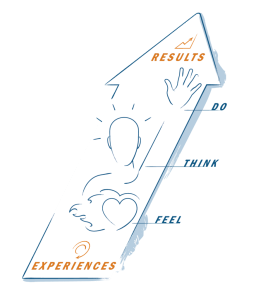 Successful product launches motivate and prepare your sales and marketing teams and require purposeful and creative planning. Product training is the critical success factor for any launch—and experience shows that a holistic approach to training will foster significantly better results. To boost effectiveness, think of product training as a learning journey, rather than an event.
When it comes to preparing your organization for a product launch, identifying what you want your various learner audiences to do (or avoid doing) back on the job should not be difficult. Yet, to influence behavior (the “do”), you need to first influence what your sales reps and marketing teams think and feel about the new product and boost their own personal capabilities in selling it.
Consider the following eight critical elements when planning your next launch training program:
Define a vision.
If you want to keep the learning journey grounded and aligned to business outcomes, start by defining what success looks like with your key stakeholders. Take a moment to consider: How will we know if the product launch is a success? What will be different? What impacts will this launch have on the business and our customers? What metrics will we use to measure success?
Conduct an audience analysis.
Thoughts, feelings, and behaviors are shaped through the experiences we have—which means we can influence behavior change by creating thoughtful, relevant experiences for our learners. To do this, we must get to know our learner segment(s) and consider their daily activities, motivations, and challenges. Empathy mapping and creating realistic learner personas help us narrow our focus to moments that matter to our learners and ensures the learning experiences we create are learner centric, not content centric.
Identify instructional goals.
You identified your vision for a successful product launch and created true business outcomes in step one. Now, it’s time to identify the goal(s) for the launch learning journey. Be specific about the instructional goals and mindful of how they connect back to your organization’s desired business outcomes. Take a moment to consider: How will we know the launch learning experience was a success? What will be different? What metrics will we use to measure the success of the learning?
Determine learning objectives.
To achieve your instructional goal(s), reflect on what your learners must know, do, and believe as a result of the training. Finish this sentence: “After completing the product launch learning journey, sales reps will be able to…” The know, do, and believe statements become the learning objectives that will help you assess whether your launch learning journey was successful. They will also help you stay focused on what truly matters when building out the content needed for the learning. If content doesn’t support the learning objectives, it should not be included.
Organize by topics and categories.
Your learning objectives will naturally align to common topical areas or categories (for example, product knowledge, disease state, customer focus, competitor claims and information, and objections or barriers, to name a few). Organize your learning objectives from step four into logical topics or categories and decide if there is a natural order to the topics and the objectives within each. For example: Do your sales reps need to know the product information before practicing customer conversations, and/or do they need to recognize potential competitor claims before tackling objection handling?
Design the experience.
Consider designing the experience using a three-phased approach. Engage the learners by building their foundational knowledge of the product you’re launching. This is typically online, independent learning. Deepen their knowledge and build skill by giving them opportunities to practice, make mistakes, win, and receive peer feedback. Live, in-person, or virtual collaborative workshops are best here. Finally, reinforce their newfound knowledge and skill on an ongoing basis, which increases their confidence and improves retention overall.
Map solution tactics and techniques.
For each phase in the launch learning journey, consider what learning tactics you’ll need to maximize learner engagement and knowledge/skill retention. Leverage storytelling, create emotional connections, balance the cognitive load (minimize the “tell”), consider spacing and “chunking” the learning, and build in practice opportunities along with specific, timely feedback. Mixing it up ensures your learners will actively be engaged in their learning as well.
Localize the content.
Optimizing a global product launch learning journey for localization must start at the very beginning of your planning. Consider these best practices:
Design a “plug and play” approach with a foundational framework plus examples, scenarios, and specific activities to be replaced or developed at the local level.
- Consider wireframing activities for in-person workshops or webinars and templates for elearning courses that can be reskinned locally, so the look and feel is contextual and relevant to that region.
- Provide scenario-building worksheets or workshops by region to capture location-specific content.
- Create sets of regionally accurate scenarios and content that can be included in the foundational framework, as needed.
Create and engage regional and/or affiliate champions as you design and develop the journey.
- Invite regional representatives to contribute to the design of the initial program and include those same representatives in the pilot of the program.
- Ask regional representatives to help user-test any online learning courses or tools.
- Create a champions program that trains the regional representatives on the program and gives them tools post-launch to be successful in their regions as the program rolls out and they build buy-in at the country level.
- Check in with champions post-launch to answer questions, offer support, and maintain buy-in.
Include localization standards as part of your launch’s style or formatting guide. Examples of standards include:
- Avoid lengthy course, module, and screen or activity titles.
- Avoid regional slang and colloquialisms.
- Avoid contractions.
- Ensure text is not embedded into images.
- Include closed captions for any audio-driven experience (e.g., narrated video animations).
- Avoid audio-driven software simulations; use on-screen text directions and prompts instead.
- Include a mix of photos, scenarios, and characters that are ethnically and geographically diverse.
While each of these steps requires much deeper evaluation and consideration, these best practices will help you envision a product launch learning journey that taps into the potential of your people and enables them to drive the business outcomes tied to your launch.