
 Molly Winter – Sr. Solutions Consultant
 Custom-crafted digital experiences. Interactive portals. Self-paced learning. Mobile apps. Augmented reality. When it comes to tools for rolling out global transformations, I’ve seen the gamut. Yet, one trend is clear: organizations are prioritizing employee experiences that blend in-person, virtual, and digital modalities. As existing and emerging digital solutions shape the modern employee experience, user experience (UX) design is integral to performance solutions and presents new opportunities for change leaders to influence adoption.
As organizations define their digital aspirations and seek to develop a more adaptable and agile workforce, the potential for behavior change extends to digital experiences, as well.
Our approach to designing experiences at TiER1 is both holistic and human centered. We look at the breadth of “performance science” (which includes psychology, behavioral economics, design thinking, and more) to consider all performance factors, from environments to mindsets, that influence behaviors.
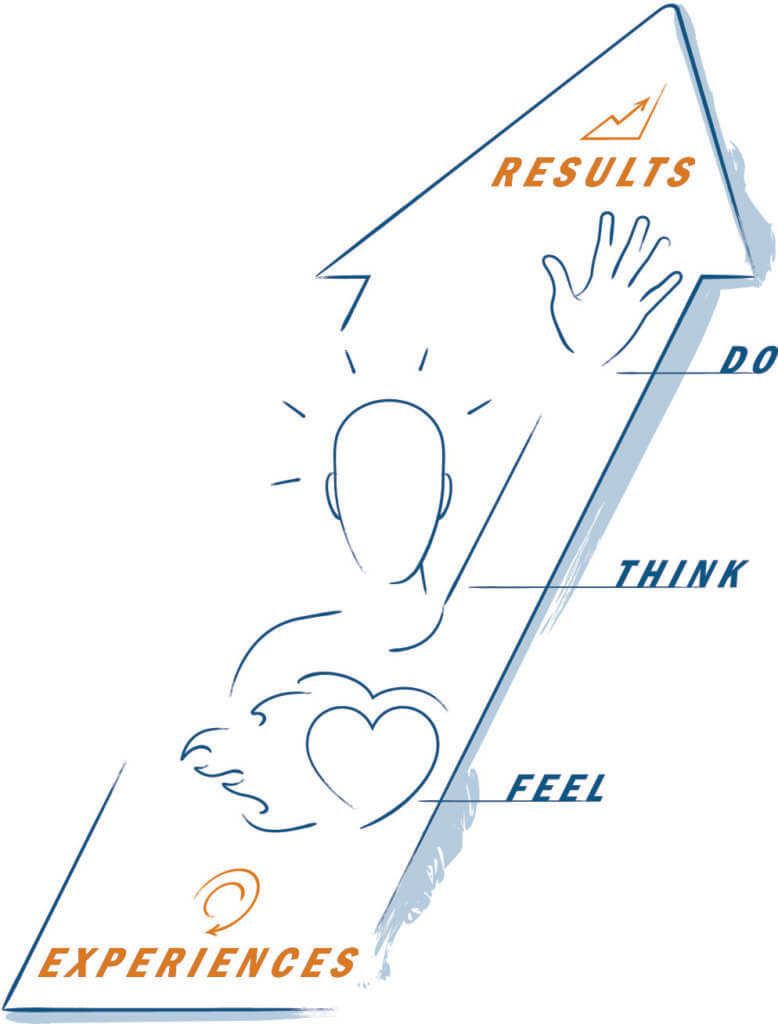 A key model that we use for performance experience design is TiER1’s Performance Model, a visual framework for how we think about the connection between organizational results and our experiences. (Click here to learn more about designing experiences to enable the performance of people.)
I’ve worked closely with UX strategists and designers to balance the needs of users with organizational goals in the design process of new or reimagined digital experiences. Through these collaborations between UX and change, I’ve realized these partnerships are so productive because we share similar goals: Aligning on a vision. Understanding the audience. Journey mapping. Measuring engagement. All contribute to activating a change strategy AND making digital experiences more impactful.
Change and UX can leverage one another’s perspectives by combining areas of expertise throughout the design process.
If you’re thinking, “But we don’t have anyone in UX on our team,” consider which stakeholders are responsible for the design of the experience. More roles are becoming responsible for UX, even if it’s an implicit part of what they do, rather than their title. Some examples of “hidden” UX designers include people who build online training programs using rapid authoring tools; people who create layouts and navigation paths for their organization’s intranet; and people who create interact PDFs, digital forms, and other assets.
Here are five opportunities for better collaboration and partnership between UX and change:
Identify the desired behaviors that will support the future state vision, including user behaviors within the digital experience, and determine any potential barriers that can be removed to support adoption.
Develop personas and invite user representatives to participate in design workshops. Invite users to participate in the design process to ensure that the solution meets their needs, is intuitive to use, and generates positive buzz and awareness.
Map user stories and key moments in the user journey directly to business needs. Consider how the digital experience will help users stay productive, understand and complete tasks, stay engaged, learn, etc., and what impact that will have on the business.
Capture impacts and build awareness at the same time through prototype testing, pilots, and engaging super users. Invest more time to ensure the solution is useful and user friendly. Build a network of early adopters.
Align on and capture metrics to measure engagement to support evaluation as well as ongoing improvements to the solution to drive sustainable change.
A poor user experience will result in poor engagement, no matter how robust the change plan. As digital experiences become more integral to performance and transformation initiatives, it is beneficial for change leaders to dedicate time to partnering closely with UX strategists. Likewise, UX strategists can benefit from collaborating closely with change leaders to ensure a successful launch for new digital experiences. Ultimately, partnerships among UX and change will result in better experiences for people that drive desired behaviors and results.
If you’d like to connect with our team to discuss UX design and change partnerships, give us a call at 859-415-1000 or reach out through the form below.